
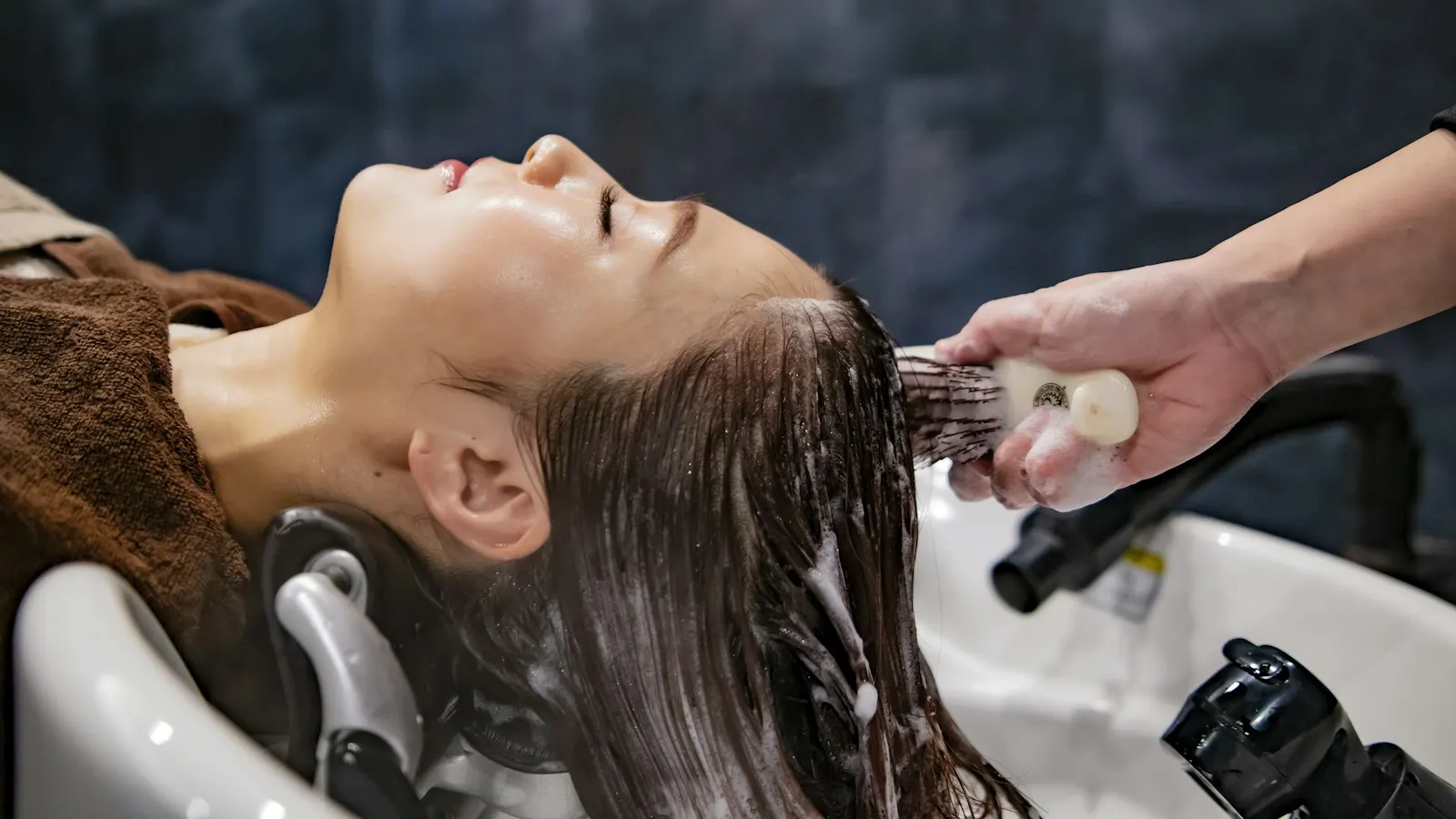
Dandruff is flaking of the scalp, often with itching, linked to a yeast called Malassezia that lives on every scalp, plus scalp oil and an individual sensitivity to it. In humid countries like Malaysia it is very common, and it tends to come and go. Medicated shampoos work by reducing that yeast or by loosening scale, and the right one, used properly, controls it in most people. Using it the wrong way is the most common reason it seems not to work.
The short answer
Start with a shampoo containing ketoconazole, zinc pyrithione or selenium sulfide, lather it onto the scalp, leave it for three to five minutes, and use it two to three times a week for two to four weeks. Then cut down to once a week or every two weeks to keep it away.
Coal tar and salicylic acid are useful for thicker scale. See a doctor if the scalp is red, sore or oozing, you have thick plaques, hair is falling out, or there is no improvement after four weeks.
What dandruff actually is
Mild dandruff and its more inflamed form, seborrhoeic dermatitis, sit on the same spectrum. The yeast breaks down scalp oil into by-products that irritate some people's skin, which responds by shedding cells faster, producing visible flakes. Dandruff is not caused by poor hygiene or dry hair, and it is not contagious. Flares are common with stress, lack of sleep, heat and sweat, humidity, and infrequent washing.
The common ingredients compared
| Ingredient | How it works | Best for | Watch out for |
|---|---|---|---|
| Ketoconazole (1–2%) | Antifungal that reduces Malassezia | Moderate to persistent dandruff and seborrhoeic dermatitis | Occasional irritation; stronger strength may need a pharmacist or doctor |
| Zinc pyrithione (about 1%) | Antifungal and antibacterial | Mild to moderate dandruff; gentle for regular use | May be less effective alone in severe cases |
| Selenium sulfide (1–2.5%) | Antifungal and slows skin-cell turnover | Moderate dandruff, oily scalp | Odour; can discolour light, bleached or chemically treated hair; rinse well |
| Coal tar | Slows cell turnover and softens scale | Thick scale, scalp psoriasis-type scaling | Strong smell; can stain light hair and increase sun sensitivity; check with a doctor if pregnant |
| Salicylic acid | Loosens and removes scale (keratolytic) | Thick, stuck-on scale | Can dry the scalp and hair; not an antifungal on its own |
| Ciclopirox (about 1.5%) | Antifungal with anti-inflammatory action | Persistent cases where others have failed | Availability varies; ask a pharmacist |
No single ingredient is best for everyone. Many people do well rotating two, for example ketoconazole one week and zinc pyrithione the next, which also helps if you tire of the smell or feel of one product.
How to use them so they actually work
- Wet your hair and scalp thoroughly.
- Apply the shampoo to the scalp — not just the hair — and massage gently with your fingertips, not nails.
- Leave it on for three to five minutes. This is the step most people skip. The active ingredient needs contact time to work.
- Rinse well, then use a normal conditioner on the lengths if the hair feels dry.
- Use two to three times a week for two to four weeks, then reduce to once a week or fortnightly as maintenance.
- Wash often enough. Letting oil and sweat build up feeds the yeast, so washing frequently with a medicated shampoo is not harmful for dandruff.
Choosing one
- Mild flaking, little itch: zinc pyrithione, or ketoconazole 1%.
- Persistent flakes or an itchy, greasy scalp: ketoconazole 2% or selenium sulfide.
- Thick, stuck-on scale: salicylic acid or coal tar first, followed by an antifungal.
- Dry, sensitive or colour-treated hair: start with zinc pyrithione or ketoconazole and use conditioner; avoid selenium sulfide if you have blonde or bleached hair.
- Children: ask a doctor or pharmacist first, as strengths and ingredients vary by age.
Side effects and cautions
Most people tolerate medicated shampoos well. Possible effects include mild scalp irritation, dryness, oiliness, changes in hair texture and, with some ingredients, hair discolouration. Stop and seek advice if you develop a rash, swelling, severe burning or blistering. Avoid getting any of these products in the eyes. If you are pregnant or breastfeeding, or have a known skin allergy, check with a doctor or pharmacist before using coal tar or stronger prescription products.
Do
- Leave the shampoo on for the full time.
- Use it regularly for the full two to four weeks.
- Rotate products if one stops working.
- Keep using a lower maintenance schedule afterwards.
- Check the label and follow the dosing.
Don't
- Scratch or pick flakes with your nails.
- Skip washing because the scalp feels sore — frequent washing helps.
- Use very hot water or harsh scrubbing brushes.
- Switch product every few days before giving one a fair trial.
- Mix strong products at once without advice.
Common mistakes
- Rinsing straight away. The shampoo is on the scalp for seconds, so it cannot work.
- Stopping once the flakes clear. The yeast returns; maintenance prevents that.
- Treating a scalp condition that is not dandruff with the wrong product for weeks.
- Using styling products, oils and pomades heavily, which build up scalp oil and feed the yeast.
When it is not dandruff
| Condition | Clues |
|---|---|
| Dandruff / seborrhoeic dermatitis | Loose white or yellowish flakes, itch, sometimes red greasy patches along the hairline, ears, eyebrows. |
| Scalp psoriasis | Thick, silvery, well-defined plaques that may extend beyond the hairline. |
| Contact dermatitis | Red, itchy, sore scalp after a new dye, shampoo or product. |
| Fungal infection of the scalp (tinea capitis) | Patchy scaling with broken hairs or bald patches, more often in children; needs oral treatment. |
| Scalp folliculitis | Tender or itchy pimples and pustules around hair follicles. |
| Head lice | Intense itching, small bugs or nits glued to hair; see our head lice guide. |
When to see a doctor
See a doctor if there is no improvement after four weeks of correct use, the scalp is red, sore, bleeding or oozing, you have thick plaques or crusts, patches of hair loss, the flaking spreads to your face or body, or it is affecting your sleep or confidence. A doctor can confirm what it is, prescribe stronger shampoos or lotions, and rule out conditions that look like dandruff.
DSH doctors are primary care doctors focused on skin, hair and scalp health. Find your nearest branch on our skin clinic Penang home page, learn about scalp treatment, or read our guide to dandruff, folliculitis and flaking.
Frequently asked questions
Which anti-dandruff shampoo is best?
There is no single best one. Ketoconazole, zinc pyrithione and selenium sulfide are the main antifungal options, and ketoconazole is often the most effective for persistent dandruff. Coal tar and salicylic acid are better for thick scale. Technique and consistency matter as much as the ingredient.
How long should I leave the shampoo on?
Three to five minutes, with the shampoo massaged into the scalp. Rinsing immediately gives the ingredient no time to work, which is the most common reason a good product seems to fail.
How often should I use a medicated shampoo?
Typically two to three times a week for two to four weeks, then once a week or every two weeks to keep it controlled. Follow the label, and ask a pharmacist or doctor for advice if you need something different.
Will dandruff go away permanently?
It is usually a long-term, relapsing condition rather than one that is cured. It can be well controlled with a maintenance routine, and flares often come back with stress, heat, sweating or stopping treatment.
Can dandruff shampoo cause hair loss?
Dandruff itself and heavy scratching can contribute to hair shedding, and treating it often helps. Medicated shampoos are not a typical cause of hair loss. If you are losing hair in patches or more than usual, see a doctor.
Is dandruff contagious?
No. The yeast lives on everyone's scalp and dandruff does not spread from person to person. Sharing combs does not give you dandruff, though sharing them can spread other scalp problems such as lice.
Flaking that will not go away?
Have a doctor check your scalp. We will tell you whether it is dandruff or something else, and which treatment suits you. No referral needed.
Scalp treatmentContact us