
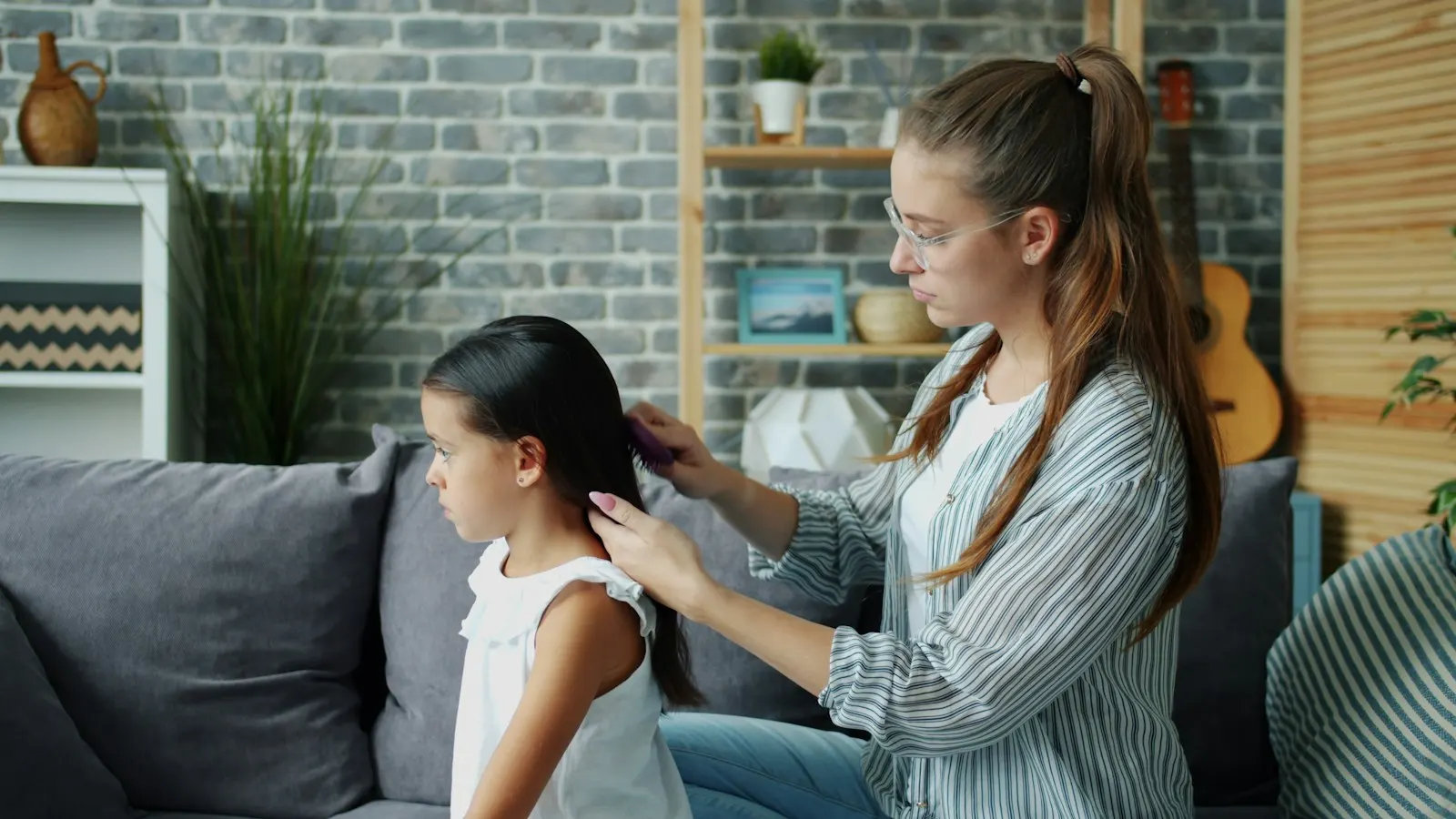
Head lice are tiny, wingless insects that live on the human scalp and feed on blood. They are very common in children aged four to eleven, spread by head-to-head contact, and have nothing to do with dirty hair or a dirty home. They do not spread disease, but the itching is miserable and the stigma is real. With the right treatment applied correctly — and repeated at the right time — they are straightforward to clear.
The short answer
Treat only when you have found a live louse. Use a proven lotion, such as dimeticone, or permethrin where advised, applied exactly as directed, and repeat after 7 to 10 days to catch newly hatched lice. Check and treat everyone at home who is affected.
See a doctor or pharmacist if treatment fails, the scalp is sore, crusted or oozing, or the child is very young or has eczema or asthma.
What head lice are
An adult head louse is about the size of a sesame seed — two to four millimetres — and grey-brown. Lice cannot jump or fly; they crawl from one head to another when hair touches. Female lice glue eggs ("nits") to hair close to the scalp. The eggs hatch in about a week, and the young lice mature in another week or so, which is why one treatment is rarely enough.
Lice live only on humans and survive for only a day or so off the head. Pets do not carry them.
Signs, and how to check properly
- An itchy scalp, especially around the ears, back of the neck and crown. The itch is an allergic reaction to louse saliva and may take weeks to appear the first time.
- Small red spots or scratch marks on the scalp and neck.
- A tickling or crawling feeling, often worse at night.
- Visible nits — small oval white or yellowish specks glued to the hair shaft.
Itching alone is not proof, and nits alone are not proof either — empty or old nits can stay in the hair for months after lice are gone. The only reliable diagnosis is finding a live louse.
How to do a wet-combing check
- Wash hair with ordinary shampoo, apply plenty of conditioner, and leave it in.
- Use a plain wide-tooth comb to detangle, then switch to a fine-toothed lice comb with teeth about 0.3 mm apart.
- Start at the roots, with the teeth touching the scalp, and comb slowly all the way to the end of the hair.
- Wipe the comb on a white tissue after each stroke and look for lice and nits.
- Work section by section, for about ten minutes in short hair and up to thirty in long hair.
Common myths
| Myth | The facts |
|---|---|
| "Lice mean poor hygiene." | Lice are just as happy on clean hair. Washing does not prevent or cure them. |
| "Lice jump or fly." | They crawl only. Spread needs head-to-head contact, or occasionally shared hats, brushes or pillows. |
| "Pets spread lice." | Human head lice do not live on animals. |
| "Nits mean active infestation." | Nits more than about a centimetre from the scalp are usually old or empty. Find a live louse before treating. |
| "Everyone must shave their head." | Not needed. Treatment and combing work. |
Treatments that work
No treatment is perfect, and resistance to some insecticides is well documented, so the aim is to use a product correctly and repeat it. Options include:
- Dimeticone lotion. A silicone oil that suffocates lice physically, so resistance is not a concern. Apply as directed to dry hair, leave for the stated time, then wash out. Repeat after about seven days.
- Permethrin 1% lotion or cream rinse. A long-standing insecticide. Some lice are resistant to it, so if live lice remain after a correctly done treatment, ask a pharmacist or doctor for an alternative. Repeat after seven to ten days.
- Wet combing alone. Detailed combing every three to four days for at least two weeks can work, but needs patience and care. It is a good option for babies, pregnant women or when someone prefers not to use chemicals.
- Prescription treatments for stubborn cases, which a doctor can advise.
Always read the instructions and the minimum age on the label. Very young children, people who are pregnant or breastfeeding, and anyone with asthma, eczema or a sore scalp should check with a doctor or pharmacist first. Apply products only to dry or damp hair as directed, keep them away from the eyes, and do not use more than recommended.
At home and at school
- Check everyone in the household and treat only those who have live lice, at the same time.
- Wash recent bedding, towels and hats in hot water, around 60°C, and dry on a high heat, or seal items in a bag for two days. You do not need to fumigate the house.
- Soak brushes and combs in hot water for about ten minutes.
- Tell the school. Other children may need checking, which helps stop the cycle.
- School attendance. Many health bodies advise that a child need not stay home once treatment has started, but policies vary, so follow your school's guidance.
What to avoid
Do
- Confirm a live louse before treating.
- Follow the product instructions exactly.
- Repeat treatment at the right time.
- Comb through hair after treatment to remove lice.
- Check again after one and two weeks.
Don't
- Use petrol, kerosene, bleach, pesticides meant for pets or crops, or other household chemicals on the scalp — they are dangerous.
- Treat "just in case" with no lice found.
- Use treatments more often or at stronger doses than directed.
- Shame or isolate the child.
- Spend money on devices or sprays that promise to "repel" lice with no good evidence.
Preventing a repeat
No product reliably prevents lice. The most helpful steps are practical: tie long hair up for school, discourage sharing hats, brushes and hair accessories, and check your child's hair with a fine-tooth comb once a week during outbreaks. Early detection is what stops a small problem becoming a recurring one.
When to see a doctor
See a doctor or pharmacist if live lice are still present after two correctly done treatments, the scalp is red, sore, crusted or oozing (which can mean a secondary infection from scratching), the child is under two, or they have eczema, asthma or a skin condition that makes treatment harder. Not every itchy scalp is lice — dandruff, dermatitis and other scalp conditions cause itching too, and scalp folliculitis can look like bites.
DSH doctors are primary care doctors focused on skin, hair and scalp health. Find your nearest branch on our skin clinic Penang home page, or contact us to book. You may also like our guide on dandruff, folliculitis and flaking.
Frequently asked questions
How do I know my child has head lice and not dandruff?
Dandruff flakes slide off easily when you flick them. Nits are glued to the hair shaft and are hard to remove. A live louse, found by wet combing with a fine-tooth comb, is the definite sign.
How long should I treat head lice?
Most treatments need two applications, about 7 to 10 days apart, to kill lice that hatch after the first round. Check again with a fine-tooth comb after a week and after two weeks to make sure none remain.
Do I need to wash everything in the house?
No. Wash only items used in the last two days — pillowcases, towels, hats — in hot water or seal them in a bag for two days. A full house clean is not needed because lice survive only about a day away from the scalp.
Can adults get head lice?
Yes. Parents and carers often catch them from children. Check everyone in close contact and treat only those with live lice.
Are home remedies like oil, vinegar or mayonnaise effective?
Evidence is limited and results are unreliable. Some may help with combing, but they are not proven treatments. Never use petrol, kerosene or other chemicals — they are dangerous.
Is it safe to treat a baby or toddler?
Many products have minimum age limits, so check the label. For very young children, wet combing is often the first choice. Ask a doctor or pharmacist for advice before using a medicated lotion.
Itchy scalp that will not settle?
Have a doctor check your child's scalp. We will tell you whether it is lice, dandruff or another scalp condition, and what to use. No referral needed.
Scalp treatmentContact us