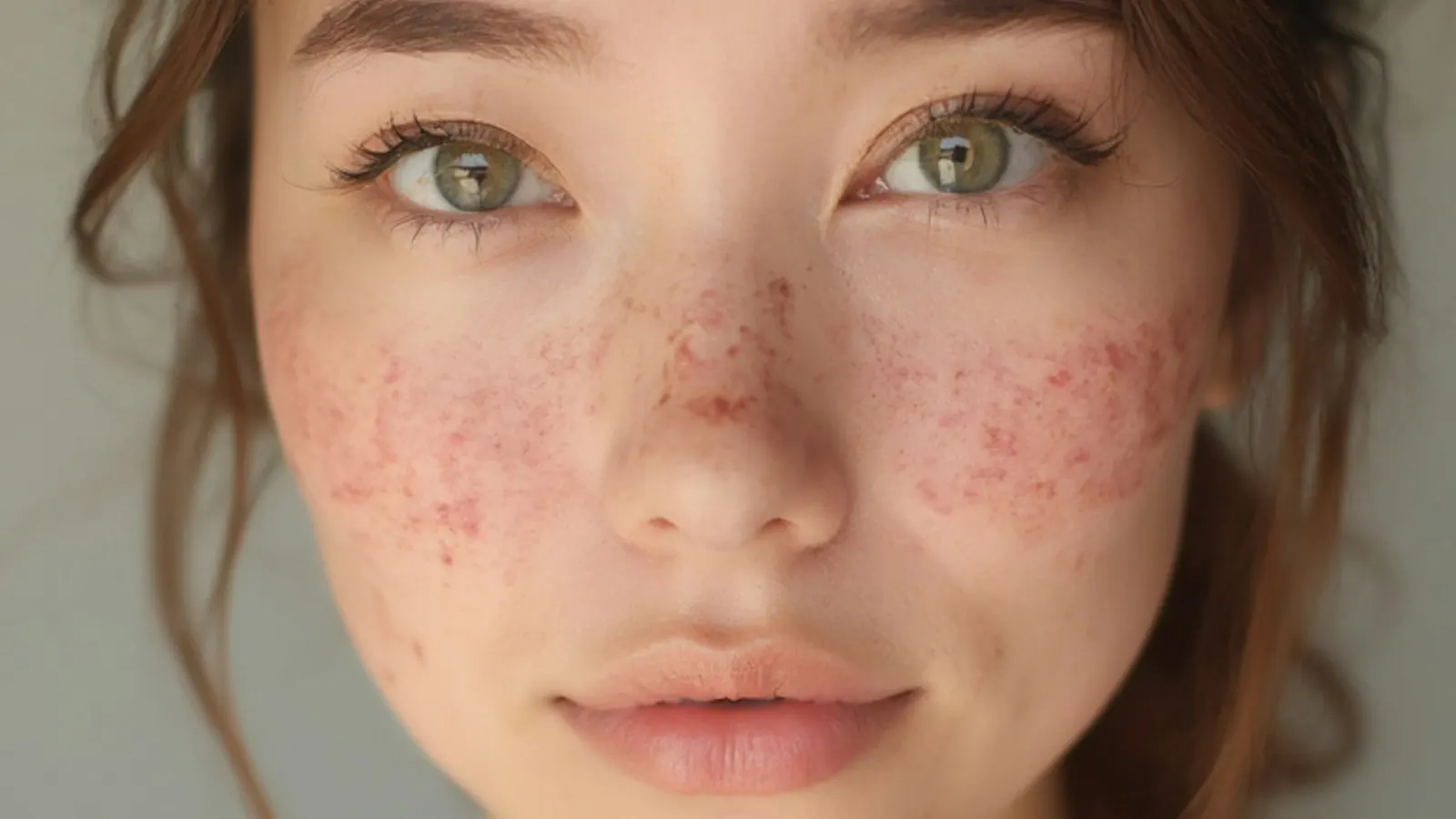
Hormonal acne is not a separate disease. It is ordinary acne in which hormone-driven oil production and inflammation are the main driver, seen mostly in adults and more often, though not only, in women. Understanding that one correction changes how you treat it, and why the scrub-and-dry-it-out approach so often backfires.
The short answer
"Hormonal acne" describes a pattern, not a diagnosis. It usually means deep, tender, slow-to-clear lumps along the lower face, jawline, chin and neck, often flaring with the menstrual cycle, and starting or persisting after the age of 25.
The usual cause is oil glands that are sensitive to normal levels of androgen hormones, not "too much hormone", so blood tests are often normal. It responds to a doctor-led plan, typically over three months or more, and it can return if treatment is stopped without maintenance.
What is hormonal acne, really?
Hormonal acne is acne where the main driver is how your oil glands respond to hormones. Everyone has androgens, including women. In some people the oil glands react strongly to them, producing more oil and a thicker, stickier plug inside the pore. Bacteria that live on the skin then thrive in that plugged environment, and the body responds with inflammation. The result is a lump that sits deep, hurts to touch and takes weeks to settle.
This is why a woman with perfectly normal blood hormone levels can still have hormone-pattern acne. The issue is usually sensitivity at the skin, not an excess in the bloodstream. It is also why "balance your hormones" supplement marketing misses the point.
It is more common in women, but men get it too. And it is not limited to the years after your teens: many people see acne begin for the first time in their late twenties or thirties.
How do you recognise the hormonal pattern?
The location and the type of lesion are the biggest clues. Hormone-pattern acne tends to look like this:
- Where: the lower face, jawline, chin and sides of the neck, rather than the forehead and nose.
- What: deep, tender, red lumps that may never come to a head, rather than mainly blackheads and whiteheads.
- When: flares in the days before a period, or a persistent pattern that starts or continues after 25.
- How long: each lump lingers for one to several weeks and often leaves a mark.
Teenage acne, by contrast, usually concentrates on the forehead, nose and chin (the T-zone) and is dominated by blackheads, whiteheads and smaller red spots.
Some accompanying signs deserve a proper check. Irregular or missing periods, new excess hair on the face or body, or thinning of the scalp hair alongside acne can point to an underlying hormonal condition such as polycystic ovary syndrome (PCOS). These are not things to diagnose yourself; they are reasons to have a doctor take a history and decide whether any tests are worthwhile.
Is it hormonal acne, teen acne, fungal acne or folliculitis?
Several different problems look similar on the face, and the right treatment differs for each. This comparison is a guide only; a doctor examining the skin is the reliable way to tell them apart.
| Type | Typical look | Typical location | Usual clue |
|---|---|---|---|
| Hormonal-pattern acne | Deep, tender lumps; few blackheads | Jawline, chin, lower cheeks, neck | Flares with the cycle; starts or persists after 25 |
| Teenage acne | Blackheads, whiteheads, small red spots | Forehead, nose, chin (T-zone) | Begins at puberty; oily skin |
| Fungal acne | Uniform, small, itchy bumps of the same size | Forehead, hairline, upper back, chest | Itch; worse with sweat; poor response to usual acne care |
| Folliculitis | Small pimples or pustules centred on hair follicles | Beard area, shaved skin, body, scalp edge | Follows shaving, friction, heat or sweat |
If your bumps are small, uniform and itchy, read our guide on fungal acne versus normal acne. If the problem is mainly on the body, see back and chest acne.
What triggers hormonal acne?
Several factors can push hormone-sensitive oil glands harder, and most people have more than one. Some are well established; others are modest and individual.
Well-established contributors
- The menstrual cycle. Hormone shifts in the second half of the cycle commonly bring a predictable flare.
- Stopping or switching hormonal contraception. Acne can appear or return in the months after a change, as the skin adjusts.
- PCOS and similar conditions. These can raise androgen activity and often come with other signs such as irregular periods.
- Stress. Ongoing stress raises cortisol, which can increase oil production and inflammation.
- Some medications. A few prescribed medicines can trigger or worsen acne. Never stop one without asking the prescribing doctor.
Modest, variable or uncertain contributors
- Diet. High-glycaemic foods and heavy dairy intake appear to worsen acne in some people, but the evidence is mixed and individual. No food cures acne, and cutting out whole food groups without a clear reason is not recommended.
- Comedogenic skincare and make-up. Heavy, pore-clogging products can add to blocked pores.
- Picking and squeezing. This does not trigger the hormonal process, but it deepens inflammation and leaves marks.
- Heat, sweat and humidity. In Malaysia's climate, sweat mixed with oil, sunscreen and masks can make blocked pores and flares more likely.
Why is adult acne so stubborn, and why do marks matter?
Adult acne is stubborn because the underlying sensitivity does not switch off when a spot clears. New lumps keep forming while old ones are still healing, and deep inflammatory lumps take weeks to resolve. Skin in adults also renews more slowly than teenage skin, so recovery and mark fading take longer.
In deeper skin tones, which includes most of the Malaysian population, the bigger long-term concern is often post-inflammatory hyperpigmentation: flat brown or dark marks that remain long after the lump is gone. The more intense and longer the inflammation, the more likely and the longer-lasting the mark. This is why controlling inflammation early matters more than waiting to see whether it settles. For more on this, see our page on hyperpigmentation.
Key points so far
- "Hormonal acne" is a pattern of acne, not a separate disease.
- The usual mechanism is oil-gland sensitivity to hormones, so normal blood results do not rule it out.
- Jawline, chin and neck, deep tender lumps, and cycle-linked flares are the typical clues.
- Irregular periods, excess hair or hair thinning alongside acne should be checked by a doctor.
- Early control of inflammation reduces the dark marks that are common in deeper skin tones.
What actually helps hormonal-pattern acne?
What helps is a doctor-led plan built around your pattern, not a single product. At DSH, care is non-laser, non-aesthetic medical treatment grounded in medical skin care. In practice that approach has five parts.
Identify what it is
The doctor confirms whether this is hormonal-pattern acne or something that looks similar, such as fungal acne or folliculitis, because the treatments differ.
Treat inflammation and oil production
A customised plan targets both the oil-driven blockage and the inflammation, matched to your skin type, tone and the severity of the lumps.
Consider hormone-related causes where the history suggests it
If your cycle, hair or other history raises a question, the doctor may discuss whether further assessment is appropriate. This is guided by your history, not done routinely for everyone.
Support the skin barrier
Gentle cleansing, suitable moisturising and daily sun protection keep the skin comfortable enough to tolerate treatment and reduce mark formation.
Follow up and adjust
Reviews let the doctor change the plan as the skin responds, and plan a maintenance phase so improvement lasts.
You can read how acne is managed in more detail on our acne treatment page.
Do
- Wash gently twice a day and after heavy sweating
- Use a light moisturiser and daily sunscreen
- Choose products labelled non-comedogenic
- Keep a note of flares against your cycle
- Stay with one plan long enough to judge it
- Keep follow-up visits, even when skin looks better
Don't
- Scrub, or use harsh or very drying cleansers
- Squeeze or pick deep lumps
- Change products every two weeks
- Use someone else's prescription
- Stop treatment the moment skin clears
- Start restrictive diets without a clear reason
What does not work
Most failed attempts at treating hormonal acne come from treating it as dirt or as something to be dried out. The following reliably disappoint:
- Scrubbing and harsh cleansers. They damage the skin barrier and add irritation, which feeds inflammation and marks.
- Over-washing and drying the skin out. Stripped skin often responds with more oil and more irritation.
- DIY toothpaste, lemon and similar remedies. These can burn or irritate the skin and commonly leave dark marks.
- Swapping products every two weeks. Almost nothing can be judged in that time, and constant change irritates skin.
- Cutting out whole food groups. Without evidence of benefit for you, this adds restriction without a reliable payoff.
- Squeezing deep lumps. There is usually nothing to extract, and it drives inflammation deeper and raises scarring risk.
- Relying on supplements alone. They are not a substitute for assessment and treatment of the actual driver.
- Using a friend's prescription. It was chosen for someone else's skin and history, and may be wrong or unsafe for you.
- Stopping when it clears. The oil-gland sensitivity is still there, so relapse is common without maintenance.
How long does improvement take?
Expect months, not weeks. A realistic picture for most people on a consistent plan looks like this, though individual responses vary.
wks
Settling in
The skin adjusts to the plan. Some dryness or mild irritation can occur, and new lumps may still appear. This is not yet the time to judge results.
wks
Clearer change
Fewer new lumps and shorter-lived ones are the usual first signs. Marks lag behind and fade more slowly than the spots themselves.
mths
Better control
Many people reach steadier control by now. Cycle-linked flares may still appear, but are often milder.
mths
Maintenance
The doctor reviews what can be simplified and what should continue to keep the skin stable. Stopping everything abruptly is the most common cause of relapse.
It is honest to say that flare patterns may persist to some degree, and relapse is common if maintenance is dropped. The realistic goal is long-term control, not a one-off fix.
When can you self-manage, and when do you need a doctor?
Occasional mild spots can be managed at home; painful, deep, scarring or persistent acne needs medical assessment.
Self-care is reasonable for a few mild jawline spots that appear now and then, settle within a week or two, and leave no marks. Gentle cleansing, a light moisturiser and sunscreen are enough, and no clinic visit is needed.
See a doctor if you have:
- Painful, deep lumps that keep recurring
- Scarring, or dark marks that are accumulating
- Acne that has not improved after about two months of sensible self-care
- Distress, low mood or loss of confidence because of your skin
- Irregular periods, excess facial or body hair, or hair thinning along with the acne
- Acne that began after starting or stopping a medicine or contraception
Questions to ask your doctor
Take these to your appointment
- Is this hormonal-pattern acne, or could it be something else?
- Do my periods, hair or history suggest I should be assessed further?
- How long should I stay on this plan before judging it?
- What should I expect in the first few weeks, and what is normal?
- How will you reduce the risk of dark marks on my skin tone?
- What is the plan once my skin improves, so it stays that way?
DSH doctors are fully registered medical practitioners, well trained in evidence-based skin healthcare. If you are in Penang, our Penang clinics provide non-laser, non-aesthetic medical treatment for acne without any referral.
Frequently asked questions
What is hormonal acne?
Hormonal acne is not a separate disease. It is acne in which hormone-driven oil production and inflammation are the main driver, usually in adults and more often, though not only, in women. It typically shows as deep, tender lumps along the jawline, chin and neck.
Does hormonal acne mean my hormones are abnormal?
Usually not. The common mechanism is oil glands that are sensitive to normal levels of androgen hormones, so blood hormone levels are often normal. A doctor may consider further assessment if you also have irregular periods, excess facial or body hair, or scalp hair thinning.
Can diet cause hormonal acne?
Diet is at most a modest and variable contributor. High-glycaemic foods and heavy dairy intake seem to worsen acne in some people, but the evidence is mixed and individual. No food cures acne, and cutting out whole food groups without a clear reason is not recommended.
Why does acne flare before my period?
Hormone changes in the second half of the menstrual cycle can increase oil production and inflammation in sensitive oil glands. This is why many adults notice a predictable flare along the jawline and chin in the days before a period.
How long does hormonal acne take to improve?
Most people need a consistent plan for about six to twelve weeks before seeing clearer change, and often three to six months for steadier control. Flare patterns may persist, and relapse is common if maintenance is stopped.
Can hormonal acne leave dark marks?
Yes. In deeper skin tones, post-inflammatory hyperpigmentation is common after deep inflammatory lumps. Controlling inflammation early, avoiding squeezing and using daily sun protection reduce the risk, but marks can take months to fade.
When should I see a doctor for adult acne?
See a doctor for painful deep lumps, scarring or accumulating dark marks, acne that has not improved after about two months of sensible self-care, a low mood linked to your skin, or irregular periods, excess hair or hair thinning alongside the acne. Mild occasional jawline spots can usually be managed at home.
Acne that keeps coming back? Get it properly assessed.
Doctor-led, non-laser, non-aesthetic medical skin care for acne, eczema, psoriasis and more. No referral needed.
Acne treatmentContact us