
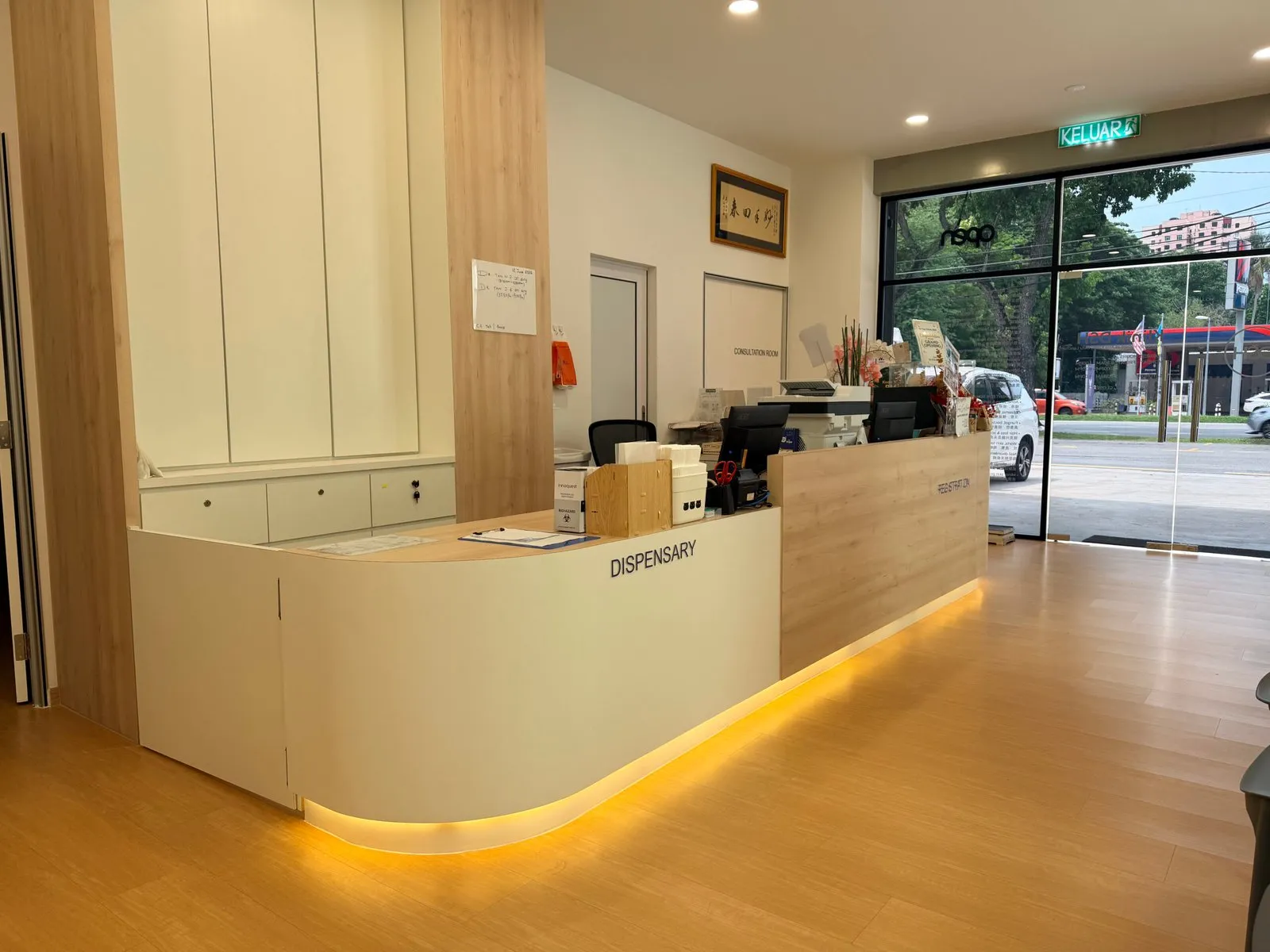
At your first skin treatment visit in Penang, the doctor takes your history, examines the affected skin, explains the likely diagnosis and gives you a treatment plan — usually within 15 to 30 minutes, with no referral needed. Most people start treatment the same day. This guide walks through the whole process so nothing is a surprise.
The short answer
A first medical skin visit has four parts: history (what you have noticed), examination (the doctor looks closely at the skin, hair or scalp), explanation (what the condition is and why it happens), and a plan (what to use, how, and when to come back).
It takes roughly 15–30 minutes, requires no referral in Malaysia, and in most cases treatment begins the same day.
What happens at your first visit, step by step
A first consultation is far less clinical than most people expect. There is no procedure room, no equipment to brace for. It is a conversation, a close look, and a plan.
Your history
The doctor asks when it started, how it behaves, what makes it flare, what you have already tried, your other medical conditions and any allergies. This is the part that most often reveals the cause, so it is worth preparing.
The examination
The doctor looks directly at the affected skin, hair or scalp — often with magnification. They may check areas you did not mention, because conditions like psoriasis and fungal infections frequently show clues elsewhere (scalp, nails, skin folds).
A test, only if needed
Most conditions are diagnosed by history and examination alone. Where it is unclear, a simple test may be done — a skin scraping for fungal infection, a swab for bacteria, or patch testing where an allergy is suspected. These are quick and done in the clinic.
The explanation
You should leave understanding what the condition is and why it is happening — not just holding a prescription. If anything is unclear, ask. Understanding the cause is what makes the treatment work at home.
Your treatment plan
A personalised plan covering what to apply or take, how often, for how long, what to avoid, and when to return. Written down, so you are not relying on memory.
How long does the first visit take?
Expect about 15 to 30 minutes. A straightforward, recent problem sits at the shorter end. Longer visits are normal when the condition is long-standing, when several areas are involved, when you have tried many treatments already, or when a test is done on the day.
Follow-up visits are usually shorter — they focus on what has changed and what needs adjusting.
How to prepare for your appointment
Fifteen minutes of preparation meaningfully improves the accuracy of a diagnosis. Skin is a moving target: it often looks calmer on the day you finally see a doctor.
Six-step preparation
- Note when it started — roughly when, and whether it comes and goes.
- Photograph a flare-up — the single most useful thing you can bring.
- List what you have applied — bring the actual tubes, or photograph the labels.
- List your medicines and allergies — including medication for unrelated conditions.
- Leave the area bare — no make-up, heavy moisturiser or nail polish over the affected skin.
- Write down your questions — consultations move quickly and things get forgotten.
That second point matters more than people realise. Eczema, urticaria and many rashes fluctuate, and a photo taken on a bad day often tells the doctor more than the skin does on a good one.
What to bring
| Bring | Why it helps |
|---|---|
| Photos of a flare-up | Shows the condition at its worst, not its calmest |
| Products you have used | Ingredients can be the trigger, or explain a poor response |
| Current medication list | Some medicines cause or worsen skin reactions |
| Previous results or notes | Avoids repeating tests you have already had |
| Your questions, written down | Makes sure the visit covers what matters to you |
What not to do before your visit
These are the mistakes that most often make a first consultation less useful:
Do
- Keep using prescribed treatment as directed
- Come with the area clean and uncovered
- Mention products you are embarrassed about
- Say what you have read online — it helps
Don't
- Stop a prescribed cream suddenly to "show" the problem
- Apply make-up or thick moisturiser over the area
- Pick, pop or scrub the skin beforehand
- Start a new product in the days before
The first one is the most important. Stopping a prescribed treatment abruptly before an appointment can trigger a rebound flare and makes the underlying condition harder to read, not easier. Keep using it and bring it with you.
Preparing for a specific condition
What is most useful to bring differs depending on what you are dealing with.
| Condition | Most useful to prepare |
|---|---|
| Acne | Every product used on your face, how long each was used, and whether breakouts follow a monthly pattern. Come without make-up. |
| Eczema | Your bathing and moisturising routine, soaps and detergents used, and photos of a flare. Note whether heat, sweat or certain fabrics worsen it. |
| Psoriasis | Family history, joint pain or stiffness, nail changes, and whether stress or infection preceded flares. |
| Scalp or hair problems | Hair care products, how much shedding you notice and where, and any scalp itch, flaking or tenderness. Avoid styling products that day. |
| Suspected fungal infection | Do not apply antifungal cream for a few days before if possible — it can mask the result of a skin scraping. Confirm this with the clinic when booking. |
You can read more about how each is managed on our acne, eczema and psoriasis pages.
What happens after the first visit
The first visit starts the process; it rarely finishes it. Skin conditions are managed over weeks, not days.
- You begin treatment, usually the same day. If a test is pending, treatment may still start to settle symptoms.
- Improvement is gradual. Acne commonly takes six to twelve weeks to show clear change. Eczema often settles faster. Psoriasis is managed for the longer term.
- A follow-up is scheduled to review what has changed and adjust the plan — the step that most often decides whether results last.
- Plans get adjusted. The first plan is a starting point, not a final answer. Skin changes, and treatment should change with it.
If something worsens sharply, you develop a fever, the area becomes hot and painful, or you react badly to a treatment, contact the clinic rather than waiting for the scheduled review.
When you may not need a clinic visit yet
Not every skin problem needs a doctor, and saying so is part of honest advice. It is often reasonable to wait a week or two for:
- A mild, short-lived rash that is not spreading and does not hurt
- An occasional single spot
- Mild dryness that improves with a plain, fragrance-free moisturiser
- Skin irritation that appeared right after a new product and is already settling once you stop it
See a doctor sooner if the problem is spreading, painful, blistering, bleeding, weeping or crusted, affecting your sleep or daily life, keeps returning in the same place, or has not improved after two to four weeks of sensible self-care. A rapidly spreading painful rash, especially with fever, should be seen promptly.
Where to go in Penang
DSH provides non-laser, non-aesthetic medical skin treatment at two Penang locations. No referral is needed — you can book directly at either.

Klinik DSH
50 Jalan Masjid Negeri, Georgetown, Penang
014-306 0376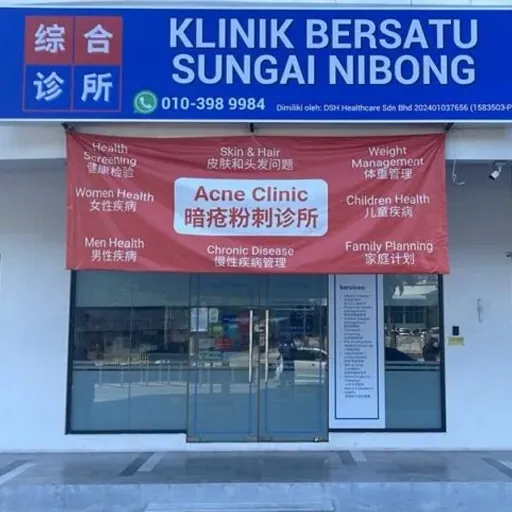
Klinik Bersatu Sungai Nibong
The Sun, 1-1-2, Tingkat Bukit Kecil 3, Bayan Lepas, Penang
010-398 9984Full details are on our medical skin treatment in Penang page, or get in touch with any question before booking.
Frequently asked questions
What happens at your first skin treatment visit in Penang?
The doctor takes your history, examines the affected skin, hair or scalp, explains the likely diagnosis, and gives you a written treatment plan. Where the diagnosis is unclear, a simple test such as a skin scraping, swab or patch test may be arranged. You leave knowing what the condition is and what to do next.
How long does a first skin consultation take?
Usually about 15 to 30 minutes. Complex or long-standing conditions, or cases needing a test on the day, can take longer. Follow-up visits are typically shorter.
Do I need a referral to see a skin doctor in Penang?
No. No referral is required in Malaysia for a medical skin consultation. You can book directly at either DSH Penang location — Greenlane (Georgetown) or Bayan Lepas.
Should I stop my current cream before the visit?
No. Do not stop prescribed treatment before your appointment unless a doctor has told you to. Stopping suddenly can cause a rebound flare and makes the condition harder to assess. Bring the product with you instead.
Will I get treatment on the first visit?
In most cases yes. Once the doctor has made a diagnosis, a treatment plan usually starts the same day. If a test is needed first, you may begin treatment to settle symptoms while the result is pending.
How soon will my skin improve after starting treatment?
Most skin conditions respond gradually over several weeks rather than days. Acne commonly takes six to twelve weeks to show clear change, eczema often settles faster, and psoriasis is managed over the longer term. Follow-up reviews adjust the plan as it progresses.
When do I not need to see a skin doctor?
A short-lived rash with no pain or spread, a single mild spot, or dryness that improves with a plain moisturiser can often be watched for a week or two. See a doctor if it is spreading, painful, bleeding, infected, affecting sleep, or has not improved after two to four weeks of self-care.
Ready for your first visit in Penang?
Doctor-led, non-laser, non-aesthetic medical skin care for acne, eczema, psoriasis and more. No referral needed.
Find your Penang clinicContact us