
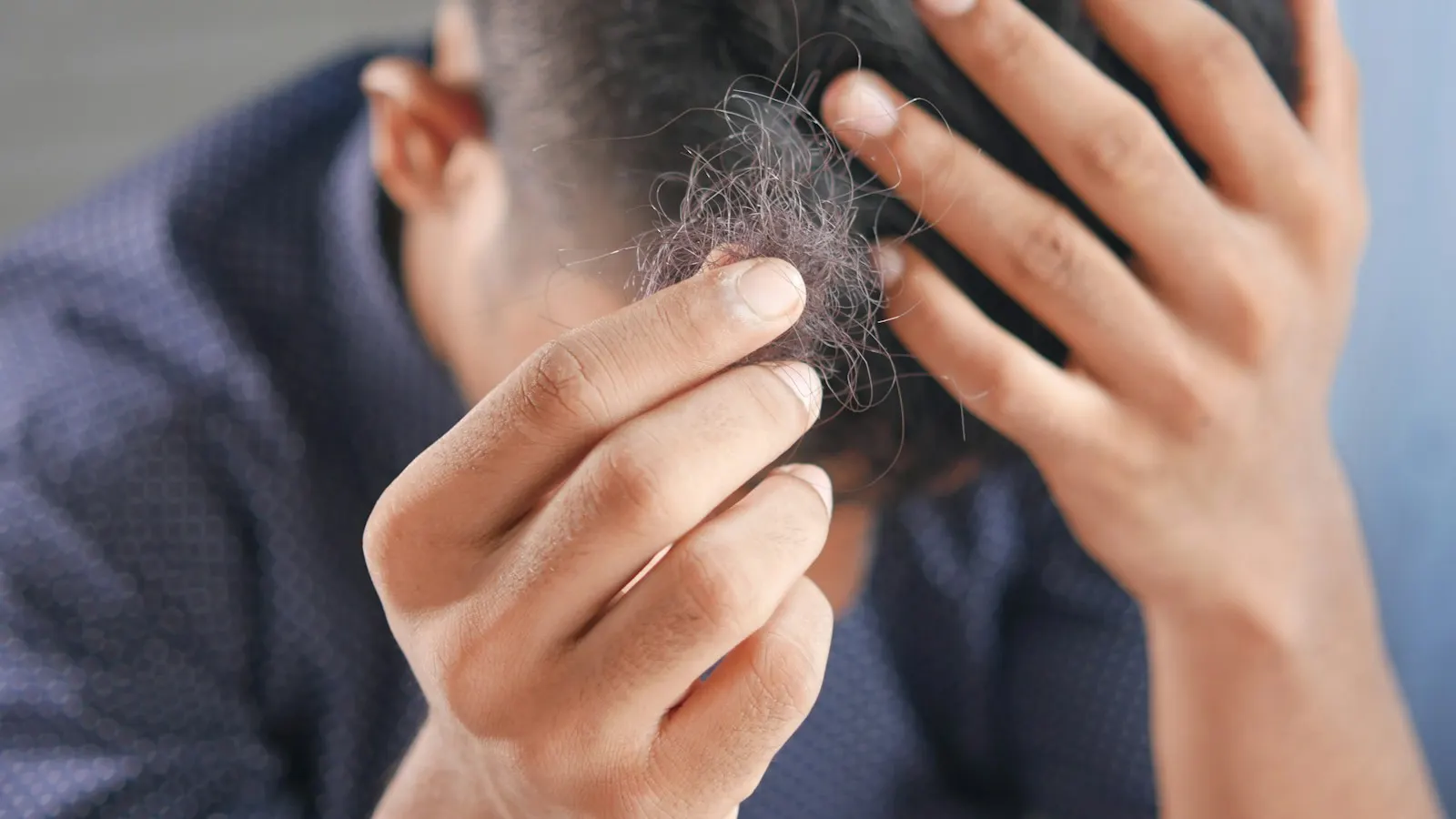
Male pattern baldness, also called androgenetic alopecia, is the most common cause of hair loss in men. It can begin in the late teens or twenties, or much later in life. It is not caused by wearing a helmet or cap, by washing too often or by poor hygiene.
The short answer
Treatment can often slow the loss and sometimes thicken thinning hair, but it is not a cure. Results tend to be better when you start while follicles are still producing hair.
See a doctor to confirm the cause before spending money on products, especially if the loss is sudden, patchy or comes with an itchy, painful or scaly scalp.
Why it happens
The tendency is inherited, and genes can come from either side of the family. In men who are sensitive to it, a hormone called dihydrotestosterone (DHT), made from testosterone, gradually shrinks certain follicles. Each growth cycle then produces a hair that is shorter and finer, until some follicles make almost no visible hair. Having this pattern does not usually mean your testosterone level is abnormal.
Typical stages
Doctors often use the Norwood scale, which has seven main stages. You do not need to know your exact number, and not everyone progresses through all of them. The broad picture looks like this:
| Broad stage | What you may notice |
|---|---|
| Early (about stages 1 to 2) | Little change, or slight recession at the temples |
| Developing (about stage 3) | Deeper temple recession; some men see the crown start to thin |
| Established (about stages 4 to 5) | Clear loss at the front and crown, with a narrowing band of hair between them |
| Advanced (about stages 6 to 7) | Front and crown areas join; hair remains mainly at the sides and back |
Some men thin mostly across the top while keeping their hairline. Speed varies widely, even between brothers. Photos taken every few months with the same lighting, angle and hair length show change far better than memory does.
Is it really pattern hair loss?
Several problems can look similar or happen at the same time:
- Heavy shedding all over after fever, illness, major stress or rapid weight loss may be telogen effluvium.
- Smooth round patches suggest alopecia areata.
- Thinning where hair is tied tightly may be traction alopecia.
- Scaling, pus or broken hairs point to infection or inflammation of the scalp.
- Medicines, thyroid problems or low iron can also affect hair.
A doctor usually looks at the pattern and scalp and asks about health and family history. Blood tests are not always needed. See our overview of hair loss causes and types for more.
Treatment options
Doing nothing is a valid choice. Pattern baldness does not harm your health, and many men are happy with a short cut or a shaved head. If you want treatment, these are the options usually discussed:
- Topical minoxidil. A solution or foam applied to the scalp. It needs regular, long-term use. Some people notice extra shedding in the early weeks, and irritation can occur.
- Finasteride tablets. A prescription medicine that lowers DHT. It is used to slow loss and may improve thickness in some men. It needs a doctor's assessment first.
- Procedures. Options such as platelet-rich plasma or low-level light devices are offered in some places. The strength of evidence and the methods used vary, so ask what results are realistic and what it will cost over time.
- Hair transplant surgery. Moves follicles from the back or sides to thinning areas. It depends on having enough donor hair, carries surgical risks and does not stop further loss of the untreated hair.
- Cosmetic choices. Hairstyle changes, hair fibres or a hairpiece can make a visible difference without medicine.
A doctor may suggest one option or a combination, based on your stage, age, health and what matters to you.
Safety questions to ask first
Finasteride can cause side effects in some men, including lower sex drive, erection or ejaculation problems and breast tenderness or enlargement. In some cases sexual symptoms have been reported to continue after stopping. Low mood, depression and thoughts of self-harm have also been reported. Tell your doctor about any history of mental health problems. If you notice mood changes, stop the medicine and contact a doctor promptly. If you have thoughts of harming yourself, seek emergency help straight away.
- Report any breast lump, pain or discharge.
- Finasteride can lower the PSA blood test used in prostate checks, so tell whoever orders it.
- Women who are or may be pregnant must not handle crushed or broken tablets, because of risk to a male baby.
Minoxidil is not suitable for everyone. Ask first if you have heart or blood pressure problems or an irritated scalp. Stop and seek advice if you get chest pain, a racing heartbeat, dizziness or swelling. Keep it away from children and pets; it can be very dangerous to cats. Minoxidil tablets are a different, prescription-only matter and should never be taken without medical supervision.
Be careful with online "hair pills" and unlabelled mixtures. They may contain prescription ingredients without saying so.
Realistic expectations
Do
- Give a treatment several months; six to twelve months is a common time to judge it.
- Count slowing or stopping further loss as a useful result.
- Use treatment as directed and attend reviews.
- Budget for long-term use before starting.
Don't
- Expect a teenage hairline to return.
- Trust promises of guaranteed or permanent regrowth.
- Judge results after only a few weeks.
- Assume gains will last after stopping.
When treatment stops, the benefit usually fades over the following months and the natural pattern continues. Responses differ, and some men see little change despite using treatment correctly.
Everyday care
No shampoo can reverse pattern hair loss, but a healthy scalp is more comfortable. Wash as often as your scalp needs, especially after sweating, and treat dandruff or itching. Protect thinning areas from the sun with a hat or sunscreen. Eat a balanced diet, and take supplements only where there is a real need.
When to see a doctor
- You want to know your options early.
- Hair loss is sudden, rapid or in patches.
- The scalp is red, painful, itchy, scaly or has pus.
- You are losing eyebrow or body hair too.
- You also feel unwell, very tired or have unexplained weight change.
- You have side effects from a hair loss treatment.
DSH doctors are primary care doctors focused on skin, hair and scalp health. They can examine your scalp, explain what may be causing the thinning and talk through options without pressure. Find your nearest branch on our skin clinic Penang home page, see our hair loss treatment page, or book an appointment.
Frequently asked questions
Can male pattern baldness be cured?
There is no permanent cure at present. Some treatments can slow it and may improve thickness while you keep using them. A transplant moves hair but does not stop the underlying tendency.
Do helmets or caps cause baldness?
They are not a cause of pattern baldness. Keep headgear clean and not too tight, since sweat and friction can irritate the scalp.
Does frequent washing make it worse?
No. Hairs you see during washing were usually ready to shed. Skipping washes does not save them and may leave the scalp oily or flaky.
When should I start treatment?
If treatment matters to you, speak to a doctor when you first notice change. Follicles that have been inactive for a long time are less likely to respond.
What happens if I stop?
Hair kept or regrown through treatment is usually lost again over the following months. Talk to your doctor before stopping, and stop promptly if you have a concerning side effect such as mood changes.
Is it only inherited from the mother's side?
No. Several genes are involved and they can come from either parent. Family history gives a clue but cannot predict exactly what will happen.
Hairline or crown changing?
Get the cause checked and hear your options, including what each one can and cannot do. No referral needed.
Hair loss treatmentContact us