
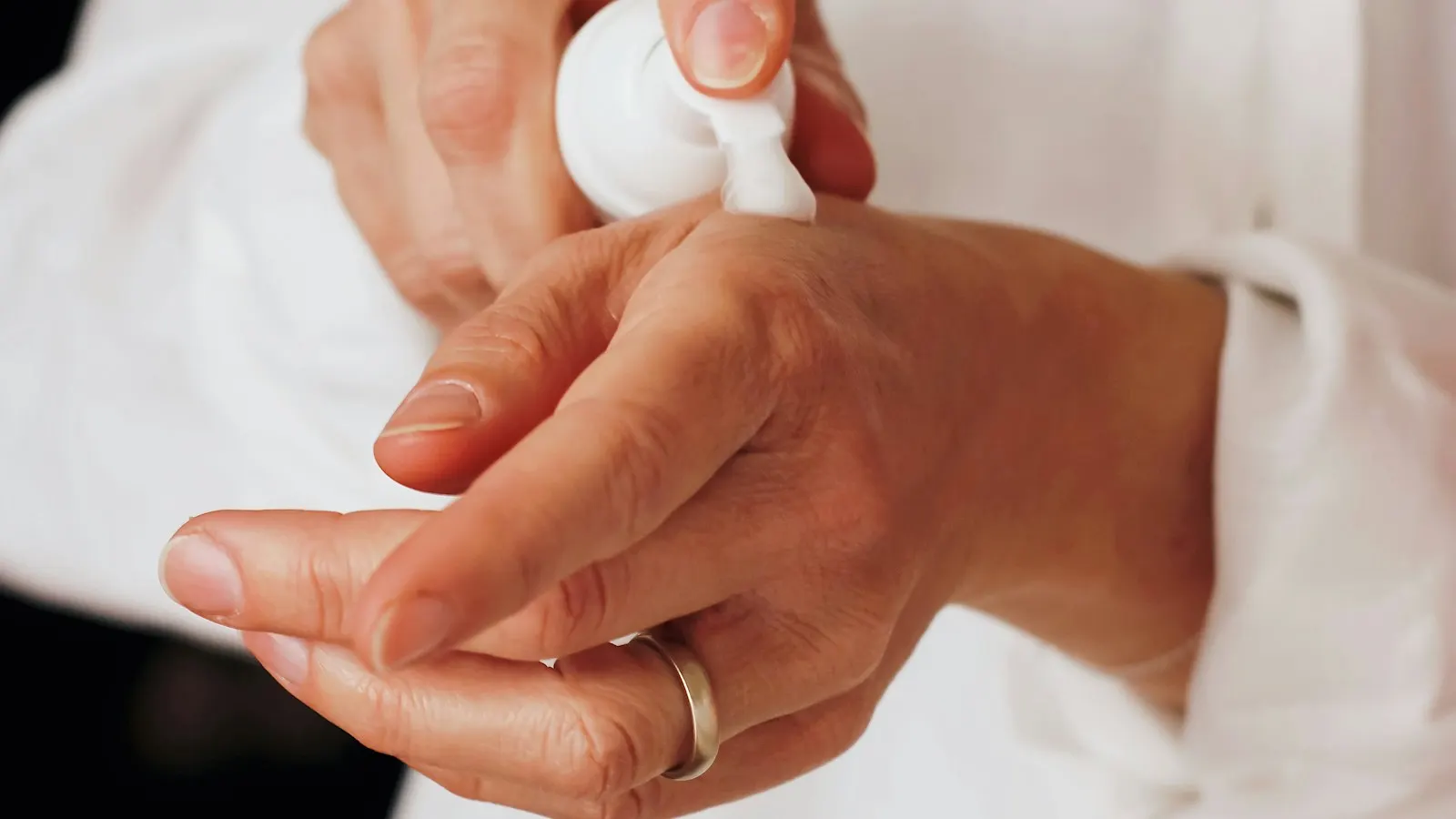
Hand eczema (hand dermatitis) is long-term inflammation of the skin of the hands. It causes dryness, redness, itching, burning, cracks and sometimes small blisters. It is very common, particularly in people who wash their hands often or work with water, food, cleaning products, hair products or cement. It is not contagious. Hand skin has a hard job and recovers slowly, so treatment works best when the skin is protected and the triggers are reduced at the same time.
The short answer
Moisturise often with a plain, fragrance-free emollient, wash with lukewarm water and a gentle soap substitute, protect your hands with cotton-lined gloves for wet work, and use a doctor-prescribed steroid ointment in short courses to settle flares.
See a doctor if the skin is cracked and bleeding, blistering, infected, not improving after a few weeks, or stopping you working, and ask about patch testing if you suspect an allergy.
What hand eczema is
The outer layer of skin acts as a barrier that keeps moisture in and irritants out. Frequent contact with water, soap, sanitiser, detergents or other irritants strips the natural oils, and the barrier breaks down. The skin then becomes inflamed, dry and sore, and the damaged barrier lets more irritants in, which maintains the cycle. People with a personal or family history of eczema, asthma or hay fever are more likely to develop it.
Types of hand eczema
| Type | What it looks like |
|---|---|
| Irritant hand dermatitis | Dry, red, cracked skin, often on the backs of the hands and between the fingers, linked to wet work, soap and sanitiser. The commonest type. |
| Allergic contact dermatitis | Itchy, red, sometimes blistering patches where the skin touched an allergen such as nickel, rubber or fragrance. See contact dermatitis. |
| Atopic hand eczema | Part of general eczema, in people with an eczema tendency, often starting in childhood. |
| Dyshidrotic (pompholyx) | Small, deep, very itchy blisters on the palms and sides of the fingers, in crops, which dry and peel. |
| Hyperkeratotic | Thick, scaly, cracked patches on the palms, often painful. |
More than one type can occur together. For a general explanation of eczema, see eczema treatment.
Common triggers
- Frequent washing with soap, hot water and alcohol sanitiser, including prayer ablutions, dishwashing and nappy changes.
- Wet work in food preparation, cleaning, healthcare, hairdressing, laundry and childcare.
- Occlusion: wearing gloves for long periods, which traps sweat and irritates the skin.
- Allergens such as nickel, fragrance, preservatives, rubber, hair dye chemicals and some foods handled raw.
- Cement, solvents, oils and detergents in construction, mechanical and factory work.
- Sweating, heat and stress, which can trigger dyshidrotic flares.
- Cold, dry air in air-conditioned rooms.
Look-alikes
- Fungal infection (tinea manuum): often affects one hand, with a scaly palm and a similar problem on the feet. See fungal infections.
- Psoriasis: well-defined, thick, scaly plaques, sometimes with nail changes or patches elsewhere.
- Scabies: intense night itch and burrows between the fingers. See scabies.
- Infected eczema: weeping, crusting or pus, needing antibiotics.
Treatment
What helps
- Emollients: thick, fragrance-free moisturisers or ointments, applied many times a day and after every hand wash. This is the most important step.
- Soap substitutes: use a gentle, soap-free cleanser or emollient wash instead of ordinary soap.
- Topical steroids: hands tolerate stronger steroids than the face, so a doctor may prescribe a potent ointment for short courses to settle flares, then taper.
- Non-steroid creams (calcineurin inhibitors) for maintenance or in sensitive areas.
- Antibiotics or antiseptics if the skin is infected.
- Specialist treatment for severe, long-lasting hand eczema: phototherapy, or tablets such as alitretinoin or other immune-modulating drugs, which a specialist supervises. Some are not suitable in pregnancy.
Improvement often needs weeks, and relapses are common when triggers return. Continue moisturising even when the skin looks normal.
Protecting your hands
Do
- Wash with lukewarm water, pat dry thoroughly, including between the fingers.
- Apply moisturiser straight after washing and at least several times a day.
- Wear cotton liners under waterproof gloves for wet work and take gloves off regularly.
- Use vinyl or nitrile gloves, and non-latex if you are allergic to latex.
- Take off rings and watches before wet work and washing.
- Wear gloves for cold, dry or chemical tasks.
Don't
- Wear gloves when your hands are already wet or sweaty.
- Use hot water, strong soaps or heavily fragranced products.
- Scratch, pick or peel blisters and scales.
- Use herbal pastes or home remedies on cracks.
- Rely on antiseptic hand rubs repeatedly if soap and water is possible.
If it affects your work
Hand eczema is one of the commonest work-related skin conditions. If you suspect your job is causing or worsening it, tell your supervisor or occupational health team, and ask about suitable gloves, wash stations with moisturiser, and task rotation to reduce wet work. A doctor can document your condition and advise whether it is work-related. If your hands are too sore to work, early treatment prevents a long absence.
When to see a doctor
- The skin is cracked, bleeding or painful, or the cracks are deep.
- There are blisters, weeping or crusts, or signs of infection such as pus, swelling or fever.
- There is no improvement after two to four weeks of regular moisturising and avoidance of triggers.
- It is affecting your sleep, work or daily tasks.
- You suspect an allergy and want to know whether patch testing is appropriate.
- It affects only one hand, or you are unsure of the diagnosis.
DSH doctors are primary care doctors focused on skin, hair and scalp health. They diagnose hand eczema, prescribe treatment and advise on protecting your hands, and refer for patch testing or specialist care when needed. Find your nearest branch on our skin clinic Penang home page, or book an appointment.
Frequently asked questions
Why are my hands so dry and cracked even though I moisturise?
The skin barrier on hands recovers slowly, and every wash removes oils. Moisturise much more often, especially right after washing, use a thick ointment or cream rather than a light lotion, and reduce harsh soap, hot water and wet work.
Is hand eczema contagious?
No. It is inflammation of your own skin and cannot be passed on by touch, even if the hands are cracked or blistered. Infected cracks may need treatment, and the infection can spread, so keep sore skin covered and clean.
Can hand sanitiser cause hand eczema?
Alcohol-based sanitisers can dry the skin, especially with frequent use, and worsen eczema. Where possible, use soap and water and moisturise afterwards, and use a sanitiser with added moisturiser when you cannot wash.
Do I need patch testing?
If hand eczema does not settle, keeps returning, or you suspect an allergy to something at work or at home, patch testing can identify triggers. A doctor can advise whether it is worthwhile and refer you.
Will hand eczema go away?
It can improve a lot and may clear completely, particularly if you remove an irritant or allergen. For many people it is a long-term condition that comes and goes, so protection and moisturising remain important.
Are steroid ointments safe for the hands?
Yes, when used as prescribed. The skin on the hands is thick enough to tolerate stronger steroids than the face. Use short courses and follow your doctor's instructions on strength and how to taper.
Hands that will not heal?
Have a doctor examine your hands. We will find the likely cause, treat the flare and show you how to protect your skin at work and at home. No referral needed.
Eczema treatmentContact us