
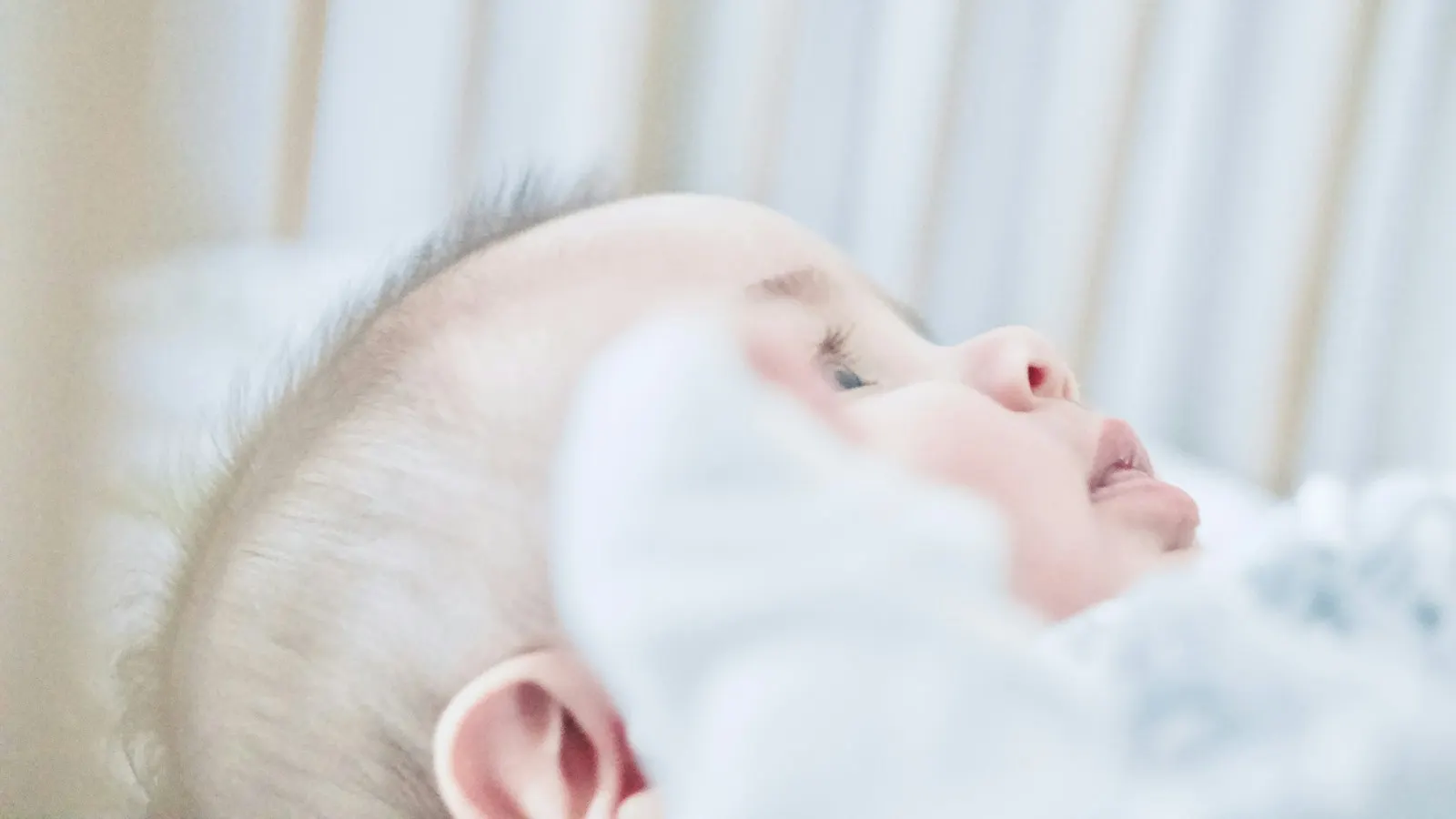
Cradle cap is the everyday name for seborrhoeic dermatitis on a baby's scalp. It often appears in the first few weeks or months of life as greasy, yellowish or white scales that stick to the head. It can also show up on the eyebrows, behind the ears and in skin folds. Most babies are not bothered by it at all, and it clears with time.
The short answer
Wash gently with a mild baby shampoo, brush softly to lift loose scales, and do not pick. A plain emollient can soften stubborn scales before washing.
See a doctor if the area is red, swollen, weeping, bleeding or smelly, if the rash spreads widely or seems itchy, or if your baby is unwell. A baby under three months with a fever needs urgent medical care.
What cradle cap looks like
You may see patches or a whole cap of thick, greasy or dry scales. The skin underneath may be a little pink. In babies with deeper skin tones, the patches may look lighter or darker than the surrounding skin. A few hairs sometimes come away with the scales and normally grow back. Unlike some other rashes, cradle cap usually causes little or no itch, and your baby will typically feed and sleep as normal.
Why it happens
The exact cause is not fully understood. It is thought to involve active oil glands, partly influenced by hormones passed from the mother before birth, together with Malassezia, a yeast that lives normally on people. It is not caused by poor hygiene, it is not an allergy to bath products in most cases, and it is not contagious. You have not done anything wrong.
A gentle care routine
- Soften if needed. For thick scales, massage a small amount of a plain, fragrance-free emollient or mineral-based baby oil into the patches and leave it for a short while.
- Brush softly. Use a very soft baby brush or a soft cloth to loosen scales that are ready to come off. Go gently over the soft spot (fontanelle); light touch is fine, but never press or scrape.
- Wash. Use a mild baby shampoo with lukewarm water, keeping it out of the eyes.
- Rinse well so that no oil is left behind, since leftover oil can let scales build up.
- Pat dry and stop if the skin looks sore.
Regular washing every few days is often enough to keep scales from building up again. Do not expect them all to lift in one go. Improvement over several washes is normal. Between washes, there is no need to keep applying products.
What to avoid
Do
- Be patient and gentle.
- Use mild, fragrance-free baby products.
- Wash softening oil out thoroughly.
- Keep your baby comfortable and not overheated.
- Ask a doctor or pharmacist before using any medicated product.
Don't
- Pick or scratch off scales with nails or a fine comb.
- Use olive oil or nut oils such as peanut or almond oil.
- Use adult anti-dandruff or salicylic acid shampoos.
- Apply steroid, antifungal or antibiotic creams left over from someone else.
- Rub on herbal pastes, powders, lime or home remedies.
Some oils may disturb a baby's delicate surface barrier, and nut oils raise a possible allergy concern. Traditional remedies can irritate or contain ingredients that are unsafe for infants, so check with a doctor first.
Is it really cradle cap?
| Condition | Clues |
|---|---|
| Cradle cap | Greasy yellow or white scales, little or no itch, baby content |
| Baby eczema | Dry, red or rough itchy patches, often on cheeks and body; baby rubs or sleeps poorly |
| Skin infection | Redness spreading, warmth, swelling, pus or honey-coloured crusts |
| Scalp ringworm | Uncommon in young babies; scaly round patches with hair loss |
| Psoriasis | Well-edged persistent patches, sometimes with a family history |
Seborrhoeic dermatitis can also appear in the nappy area and folds. If that area is not settling, see our diaper rash guide and have it examined, as yeast infection may need different care. Adults get a related condition that tends to keep returning, explained in our post on seborrhoeic dermatitis.
How long it lasts
Most cases improve over weeks to a few months, and the majority have cleared by around six to twelve months of age. It can come and go during that time. Cradle cap does not usually leave scars or cause lasting hair loss. If it continues past the first birthday, or starts for the first time in an older child, ask a doctor to check for another cause.
When to see a doctor
- The skin is red, hot, swollen, bleeding, weeping or smelly.
- The rash spreads widely over the face or body.
- Your baby seems itchy, in pain or unusually unsettled.
- There are bald patches or blisters.
- It does not improve after a few weeks of gentle care.
- Your baby is feeding poorly, unusually sleepy or has a fever. Under three months of age, a fever of 38°C or higher needs urgent medical care.
DSH doctors are primary care doctors focused on skin, hair and scalp health. They can check whether it is cradle cap or something that needs treatment, and show you what is safe for your baby. Find your nearest branch on our skin clinic Penang home page, learn about eczema care, or book an appointment.
Frequently asked questions
Does cradle cap hurt or itch my baby?
Usually not. If your baby seems itchy or uncomfortable, or the skin is sore or weeping, it may be eczema or an infection, so have it checked.
Can I pick off the scales?
No. Picking can break the surface, cause bleeding and let germs in. Soften, brush gently and wash, and let the rest loosen with time.
Which oil is safe to use?
A plain, fragrance-free emollient or mineral-based baby oil is commonly used, in small amounts, and washed out afterwards. Avoid olive and nut oils. Ask a doctor or pharmacist if you are unsure.
Is cradle cap contagious?
No. It cannot be passed to other babies or family members through touch, towels or brushes.
Will my baby's hair fall out?
A little hair may come away with the scales, and it normally grows back. Clear bald patches are not typical and should be checked by a doctor.
Can cradle cap come back?
It can return in the first months. Repeating the gentle wash routine usually helps. Persistent or later-starting scaling should be assessed.
Not sure it is cradle cap?
Have a doctor take a gentle look. We will tell you what it is and which products are safe for your baby. No referral needed.
Eczema careContact us