
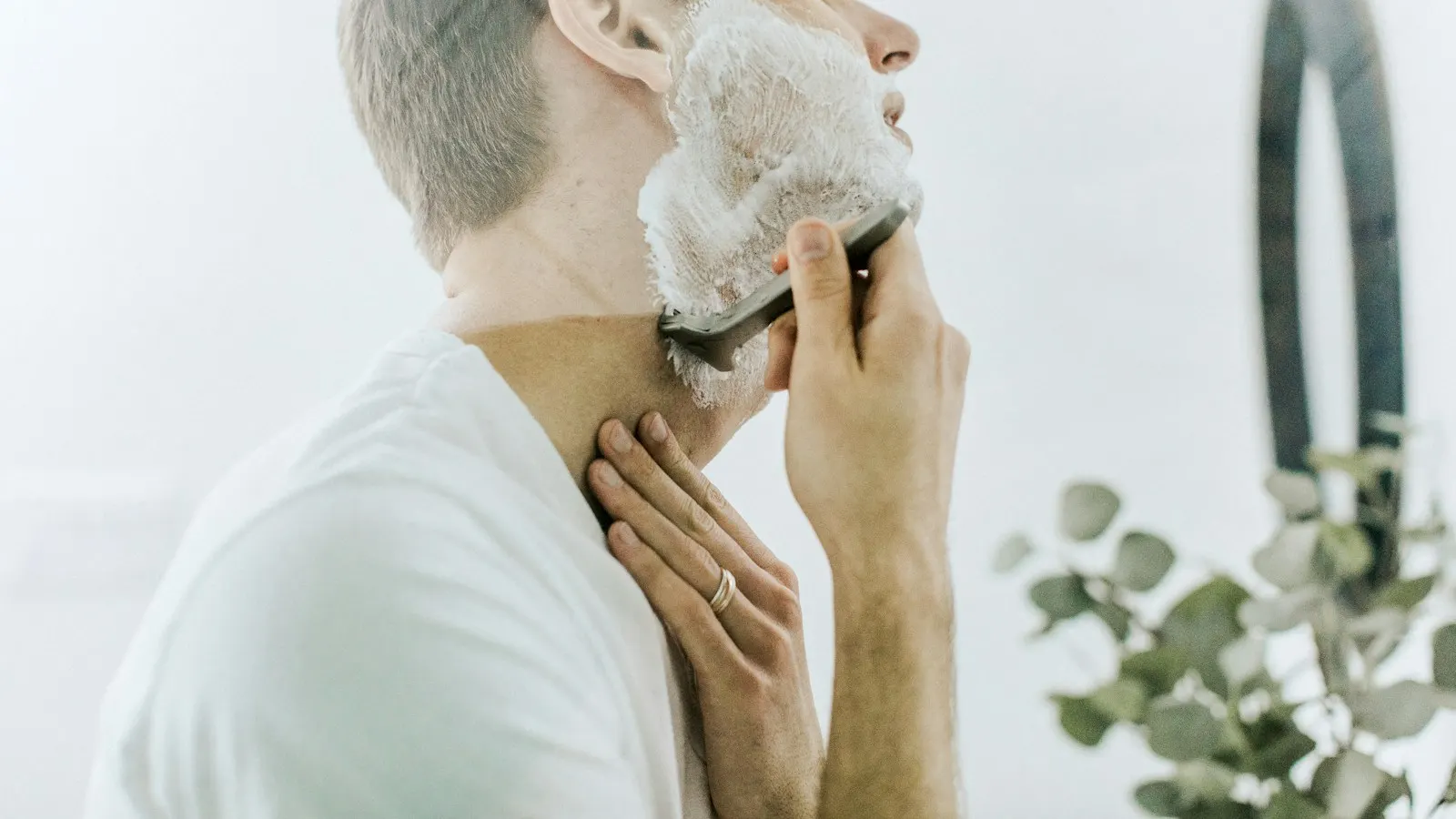
The beard area has thick, coarse hair, gets shaved or trimmed often, and in a warm, humid climate stays sweaty for much of the day, sometimes under a mask or helmet strap. Itching and bumps are easy to blame on "sensitive skin", but the right fix depends on what is actually happening around each hair.
The short answer
Bumps where hairs curl back after close shaving are usually ingrown hairs; flaking suggests dermatitis; and pus-filled or spreading patches suggest infection. For ingrown hairs, shaving less closely, or pausing for a few weeks, helps most.
See a doctor if you have painful swelling, crusting, fever, patches of hair loss, scarring or a rash that keeps spreading.
Itch from a new beard
In the first few weeks of growing a beard, many men feel itchy. Freshly shaved hairs have cut ends that can prick the surrounding surface as they grow, and the area underneath may feel dry. This usually eases as the hair gets longer and softer. Gentle washing and a light, fragrance-free moisturiser help. Itch that gets worse, or comes with redness, bumps or flakes, points to something else.
Ingrown hairs and razor bumps
An ingrown hair happens when a hair curls back into the surface, or never gets out properly. The body treats it like a foreign object, causing a red or dark, itchy or tender bump. When this happens repeatedly after shaving, doctors call it pseudofolliculitis barbae. It is more common in men with curly or coarse hair, and often affects the neck and under the jaw, where hair grows at odd angles. You may see the hair as a small loop or a dot under the surface.
It is not an infection to begin with, but scratching and digging can let bacteria in. Repeated bumps can leave dark marks, and in some people raised or keloid scars.
Other causes of an itchy or bumpy beard
| Possible cause | Clues |
|---|---|
| Seborrhoeic dermatitis (beard dandruff) | Greasy flakes and pink patches, often with scalp or eyebrow flaking |
| Bacterial folliculitis | Small pus-topped bumps around hairs; deeper cases are painful and crusted |
| Fungal infection (tinea barbae) | Scaly rings or boggy, swollen patches; hairs break or pull out easily; may follow contact with animals |
| Contact dermatitis | Burning, itch or redness after a new beard oil, dye, aftershave or shaving product |
| Acne | Blackheads and whiteheads as well as inflamed spots, often beyond the beard |
| Psoriasis or eczema | Persistent dry, scaly or inflamed patches, often elsewhere too |
Flaking usually needs a different approach from bumps. Our guide to seborrhoeic dermatitis explains how it is controlled, and reactions to dyes and fragrances are covered in contact dermatitis.
Shaving with less trouble
If you can, the most reliable first step for razor bumps is to stop shaving for a few weeks, often around three to four or longer, so trapped hairs can grow out. If work or preference means you need to shave, change the method.
- Wash with warm water and a gentle cleanser to soften the hair.
- Use enough shaving gel or cream, and keep it wet while you shave.
- Use a clean, sharp razor. A single-blade razor or an electric trimmer may cause fewer bumps than very close multi-blade shaving.
- Shave in the direction the hair grows, with light pressure.
- Do not stretch the area tight, and avoid going over the same spot repeatedly.
- Rinse the blade often and replace it regularly.
- Afterwards, apply a cool compress and a fragrance-free moisturiser.
Many men do better leaving very short stubble with a trimmer than shaving completely smooth. If an employer requires a clean shave and the bumps are severe, a doctor can examine you and document the condition.
Everyday beard care
Do
- Wash your beard and the area underneath daily, and after heavy sweating.
- Dry it properly before putting on a mask or helmet strap.
- Moisturise lightly with a simple, non-greasy product.
- Clean trimmer heads and change razor blades.
- Introduce one new product at a time.
Don't
- Dig out hairs with needles or fingernails.
- Squeeze pus bumps.
- Share razors, trimmers or towels.
- Layer heavy oils on a flaking or spotty beard.
- Use leftover antibiotic or steroid creams.
What a doctor may offer
Treatment depends on the diagnosis. For inflamed ingrown hairs, a doctor may recommend a short course of a mild anti-inflammatory cream or products that help stop the surface trapping new hairs. Bacterial folliculitis may need antibacterial treatment. Fungal infection of the beard usually needs antifungal tablets, because creams alone often do not reach into the hair follicle. A mild steroid cream used on an undiagnosed fungal infection can mask it and let it spread, so do not guess. Dark marks and raised scars are easier to manage when the bumps are controlled early.
When to see a doctor
- Bumps or itch last more than two to three weeks despite changing your routine.
- You have painful swelling, spreading redness, heat, a lot of pus or fever. Seek care promptly.
- There are bald patches, loose hairs or boggy swollen areas.
- You notice raised scars or dark marks building up.
- You have diabetes or weakened immunity and develop an infected spot.
DSH doctors are primary care doctors focused on skin, hair and scalp health. They can tell ingrown hairs apart from infection and dermatitis, and plan care that fits your shaving needs. Find your nearest branch on our skin clinic Penang home page, or book an appointment. Related reading: boils: causes and home care.
Frequently asked questions
How long does new beard itch last?
It often eases within the first few weeks as the hair grows longer and softer. If it continues, worsens or comes with bumps, redness or flakes, have it checked.
Should I pull out an ingrown hair?
Do not dig into the surface or pluck it out, as this can cause infection, marks and scarring. Pausing shaving often lets it free itself. A doctor can help with stubborn or inflamed ones.
Do razor bumps go away if I stop shaving?
They often settle over several weeks once the trapped hairs grow out. They can return when close shaving starts again, so it helps to change your method.
Can beard oil fix an itchy beard?
It may soften hair and ease simple dryness. It will not treat infection, and heavy or fragranced oils can aggravate flaking, spots or allergy.
Is beard ringworm contagious?
Fungal infection can spread from people, animals or shared items. Do not share trimmers or towels, have pets with bald or scaly patches checked, and see a doctor for treatment.
Is an itchy beard caused by poor hygiene?
Not necessarily. Shaving technique, hair type, dermatitis and allergy are common reasons. Washing gently helps, but scrubbing hard can add irritation.
Bumps after every shave?
Have a doctor check what is causing them. We will tell ingrown hairs from infection or dermatitis and suggest what to change. No referral needed.
Infection treatmentContact us