
Eczema & Dermatitis Treatment Malaysia
Lasting relief for dry, itchy, inflamed skin — from atopic eczema to contact dermatitis. Non-laser, non-aesthetic medical skin treatment from Primary Care Doctors Focused on Skin Health, across Penang, Kedah, Perak and Kuala Lumpur.
Eczema Keeps Coming Back — Here is Why
If your eczema returns despite using moisturisers and creams, you are not doing anything wrong. Most treatments address the symptoms — the redness, the itch — but not the underlying reasons the skin keeps flaring. At DSH, we take a different approach: non-laser, non-aesthetic medical skin care led by Primary Care Doctors Focused on Skin Health, targeting the root causes so flare-ups become less frequent and less severe.
Constant itching, broken sleep, the frustration of seeing no lasting improvement — we understand how much eczema disrupts daily life, for adults and children alike. Whether you are in Penang, Kedah, Perak or Kuala Lumpur, we focus on proper diagnosis, barrier repair and a long-term plan that actually keeps your skin calm.
Why Most Eczema Treatments Fall Short
Most treatments target symptoms only — not the actual reasons eczema persists. Understanding these two root causes is the foundation of lasting control.
Damaged Skin Barrier & Moisture Loss
Healthy skin holds moisture in and keeps irritants out. In eczema, the skin barrier is weakened — moisture escapes too quickly through a process called transepidermal water loss (TEWL). The skin dries out, cracks and becomes inflamed. A damaged barrier makes eczema far easier to trigger and much harder to settle. Simply applying moisturiser does not repair the barrier; it hydrates the surface temporarily without addressing the underlying weakness.
The Itch–Scratch Cycle
Eczema itches — and scratching breaks the skin, which triggers more inflammation, which makes it itch again. This cycle repeats day and night, especially in children. Breaking it requires more than willpower: it needs targeted treatment that reduces inflammation at its source and allows the skin barrier to recover. Without this, the cycle continues indefinitely regardless of what you apply.
Why You Are Still Struggling
Steroid creams reduce inflammation. Moisturisers add surface hydration. Both are useful — but on their own, neither repairs the damaged skin barrier, reduces transepidermal water loss, nor breaks the itch–scratch cycle. When these underlying problems are not addressed, eczema keeps returning — even when you follow instructions correctly. This is why proper medical assessment and a structured treatment plan make such a difference.
Common treatments address some of the problem — our approach addresses all of it
What standard treatment does
- Reduces surface inflammation
- Adds temporary surface moisture (moisturiser)
- Relieves itch short-term
What lasting control also requires
- Repair of the skin barrier
- Reduction of transepidermal water loss
- Breaking the itch–scratch cycle
- Identifying and managing triggers
- Ongoing follow-up as the skin changes
Eczema, Dermatitis & Psoriasis — How to Tell Them Apart
Eczema, dermatitis and psoriasis can look alike, which makes them easy to confuse. Here is how they differ — and why an accurate diagnosis matters before starting treatment.
Eczema & Dermatitis
Part of the same family: dermatitis means inflamed skin, and eczema is its most common form. Atopic eczema and atopic dermatitis are simply two names for the same condition — dry, itchy, inflamed skin.
Eczema vs Psoriasis
Both can look red and scaly, but eczema is usually intensely itchy and may weep or crust, while psoriasis forms thicker, silvery, well-defined plaques. They need different treatment.
Getting the Right Diagnosis
Because these conditions overlap, an assessment by your doctor — with Allergy Test where useful — is the most reliable way to know exactly what you have and treat it correctly.
Types of Eczema & Dermatitis We Treat
Atopic Eczema (Atopic Dermatitis)
The most common form - dry, itchy, inflamed skin that often begins in childhood and flares from time to time.
Contact Dermatitis
Irritant or allergic reactions where the skin touches a trigger such as soaps, metals, gloves or cosmetics.
Seborrhoeic Dermatitis
Flaky, greasy, sometimes red patches on the scalp, face and other oily areas - including stubborn dandruff.
Dyshidrotic Eczema (Pompholyx)
Small, intensely itchy blisters on the hands and feet that can sting and crack.
Discoid (Nummular) Eczema
Distinct coin-shaped patches of itchy, scaly skin, often on the arms and legs.
Hand Eczema
Dry, cracked, sore hands - common with frequent washing, gloves or contact with irritants.
Our Approach
At DSH Medical Group, we believe that effective treatment is more than just prescribing medication — it is about understanding the root cause, providing personalised care, and partnering with you for long-term skin health.
Treat the Root Cause, Not Just the Symptoms
We believe that lasting improvement begins with identifying why the condition occurs. Our doctors take time to understand your medical history, lifestyle, and environmental factors. When necessary, investigations such as blood tests or allergy testing may be recommended to help identify potential triggers, allowing treatment to target the underlying cause rather than simply suppressing symptoms.
Personalised, Safe & Effective Treatment
Every patient's skin is unique. We develop an individualised treatment plan based on your specific condition, which may include:
- Customized topical formulations
- Safe and gradual tapering regimens
- Targeted occlusion techniques and adjunctive therapies
- Practical skincare recommendations
Our priority is always to provide treatment that is safe, effective, evidence-based, and affordable.
Continuous Follow-Up for Long-Term Control
Skin conditions often change over time, and treatment should evolve accordingly. Our doctors monitor your progress closely and adjust your treatment plan whenever necessary to achieve better control, minimise relapses, and deliver lasting results.
Professional Medical Advice Without Hard Selling
Your health always comes first. We do not believe in unnecessary treatments or expensive product sales. Every recommendation we make is based on your medical needs, with the goal of providing the most appropriate and beneficial care for your condition.
Empowering Patients Through Education
Successful treatment is a partnership between doctor and patient. We believe that helping you understand your condition is just as important as prescribing the right medication. Our doctors will explain:
- Why your skin condition occurs or recurs
- How to reduce triggers and prevent flare-ups
- How to care for your skin correctly
- What to expect throughout your treatment journey
Because when patients understand their condition, they are better equipped to achieve healthier skin and enjoy long-term results.
Eczema Treatment Options Explained
Eczema care is about controlling flares and keeping skin calm long term. Your DSH doctor builds a plan around your skin and triggers - usually combining the options below.
Topical Treatments
Emollients and prescription, medical-grade creams applied directly to the skin to repair the skin barrier, calm inflammation and relieve itching. Your doctor will recommend the most suitable combination based on your skin condition.
Personalised Medical Treatment
For moderate to severe eczema, additional medical treatment may be recommended as part of a tailored plan. The choice depends on factors such as severity, triggers, skin type and medical history, discussed fully during your consultation.
Ongoing Management & Trigger Control
Eczema is long-term, so we focus on keeping it controlled — identifying and avoiding your triggers, protecting the skin barrier and reviewing your plan over time.
Caring for Eczema-Prone Skin at Home
Daily habits make a real difference between flares - here is what helps most.
- Moisturise generously and often. Apply emollient several times a day, especially right after bathing while skin is still damp.
- Keep showers short and lukewarm. Hot water strips the skin - pat dry gently rather than rubbing.
- Use fragrance-free, gentle products. Swap harsh soaps for a soap-free cleanser or emollient wash.
- Know and avoid your triggers. Common ones include heat, sweat, dust, wool and certain detergents.
- Try not to scratch. Keep nails short, and cotton gloves at night can protect skin while you sleep.
- Choose soft, breathable fabrics. Loose cotton is kinder to eczema-prone skin than wool or synthetics.
When to See a Doctor for Eczema
Book an appointment if...
Your eczema is not improving with moisturisers and over-the-counter creams, the itch is disturbing your sleep or daily life, it keeps coming back, or it is spreading.
Seek prompt care if...
Your eczema looks infected - weeping, yellow crusting, increasing pain, or you feel unwell with a fever. Infected eczema needs treatment quickly, so do not wait it out.
What Makes Our Eczema Care Different
Unlike applying creams at home, doctor-guided medical skin care addresses every factor that keeps eczema coming back — not just the visible symptoms.
Accurate Diagnosis First
Not all eczema is the same. Atopic, contact, seborrhoeic and dyshidrotic eczema each have different causes and different treatments. Knowing exactly what you have means treatment targets the right condition — not a best guess.
Skin Barrier Repair
Treatment is designed to restore the skin's protective barrier function — reducing transepidermal water loss and making skin less reactive over time. This is the foundation of long-term eczema control.
Better Treatment Absorption
Thickened, inflamed or cracked skin can block medicated creams from penetrating effectively. Our approach helps the skin absorb treatment more completely — making the same medication work better.
Breaking the Itch–Scratch Cycle
By reducing inflammation at its source, treatment relieves itch more effectively and durably — interrupting the cycle that drives so much of the skin damage in chronic eczema.
Tailored to You
Eczema type, severity, affected area, skin sensitivity and age all influence your plan. Adults and children receive different approaches. There is no one-size-fits-all prescription here.
Monitored and Adjusted
Eczema changes over time. Your treatment plan is reviewed at follow-up appointments and updated to reflect how your skin is actually responding — not left unchanged once prescribed.
Medical Care, Not Trial and Error
Every recommendation is grounded in evidence-based medical skin care. No unnecessary product sales. No hard selling. Just what your skin clinically needs, explained clearly at every step.
Real Eczema Relief
Experiences shared by patients treated for eczema and dermatitis at our clinics across Malaysia.
Eczema Treatment for Children & Adults
Many of our patients are babies, toddlers and school-aged children. Eczema in children requires a gentler, more closely monitored approach — and our doctors are experienced managing it safely at every stage of life.
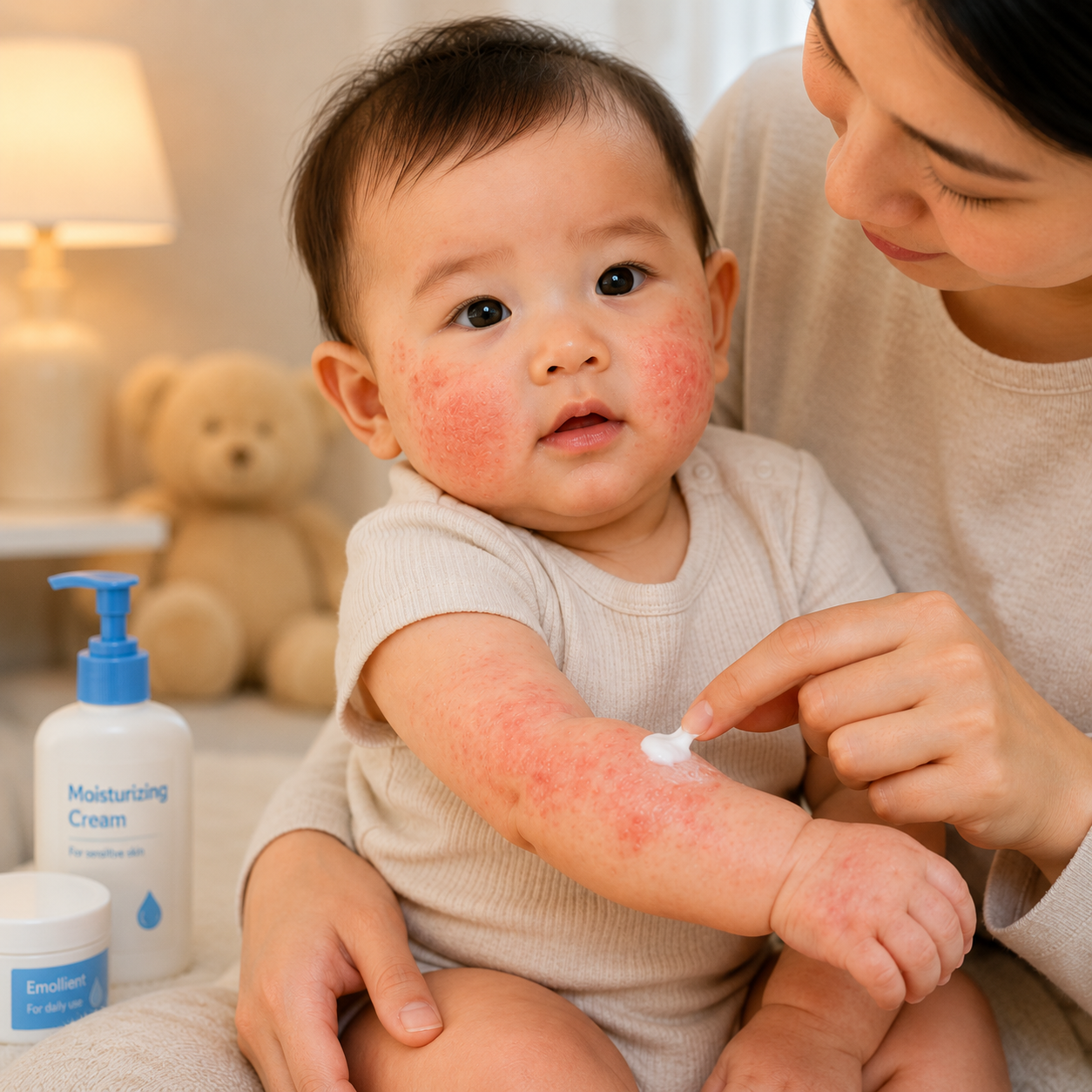
Babies & Young Children
Atopic eczema commonly begins in infancy. Night-time scratching, disrupted sleep and highly reactive skin all require careful medical management. Treatment is adapted for age and skin sensitivity, prioritising gentle barrier repair and itch relief. Many parents tell us their child's sleep improves significantly once eczema is properly controlled — sometimes within the first few weeks of treatment.
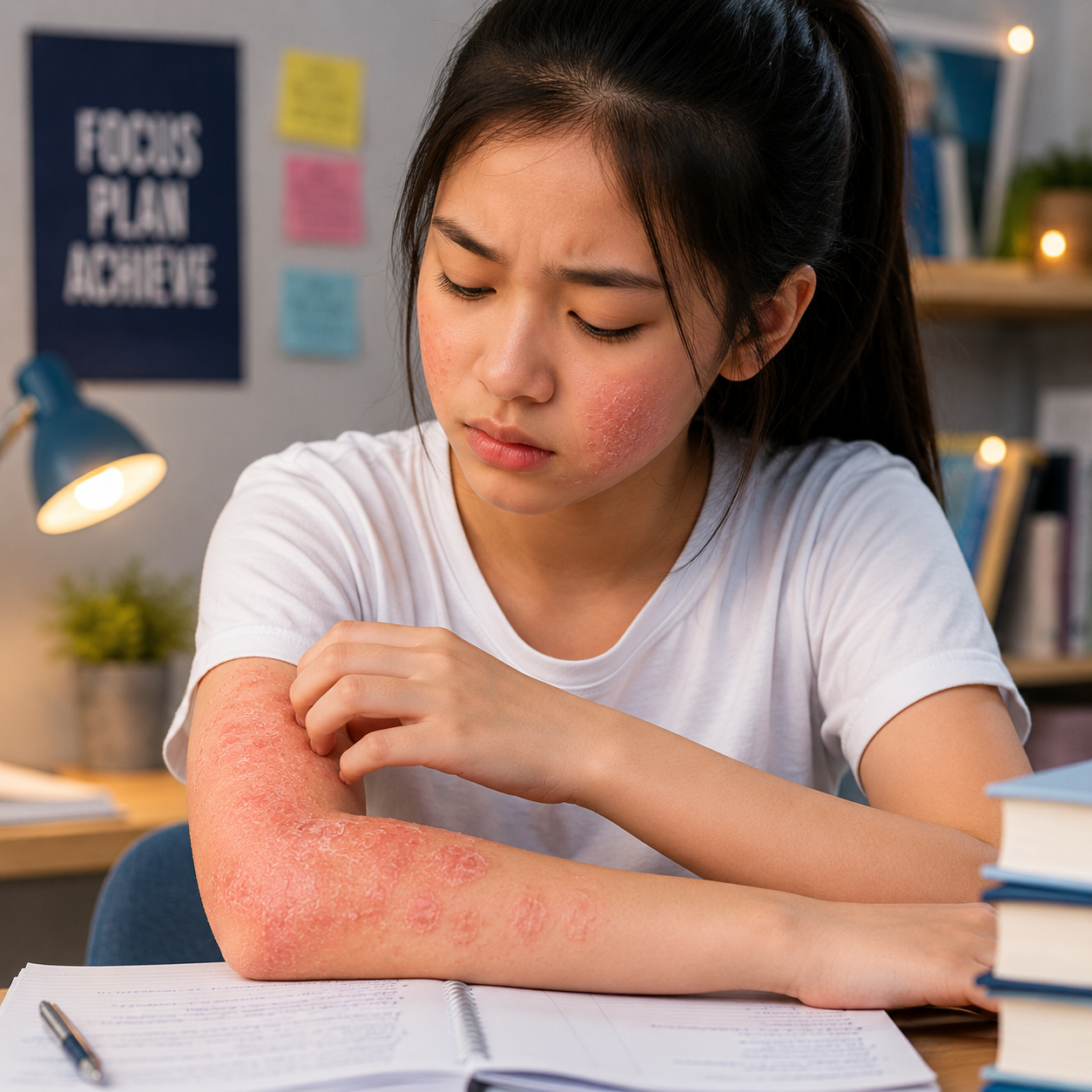
Older Children & Teenagers
Eczema that persists into school age affects confidence, concentration and social life. Flares during exam stress, sport and changing environments are common. We work with older children and teenagers to build a practical daily routine and identify personal triggers — so eczema causes as little disruption as possible.
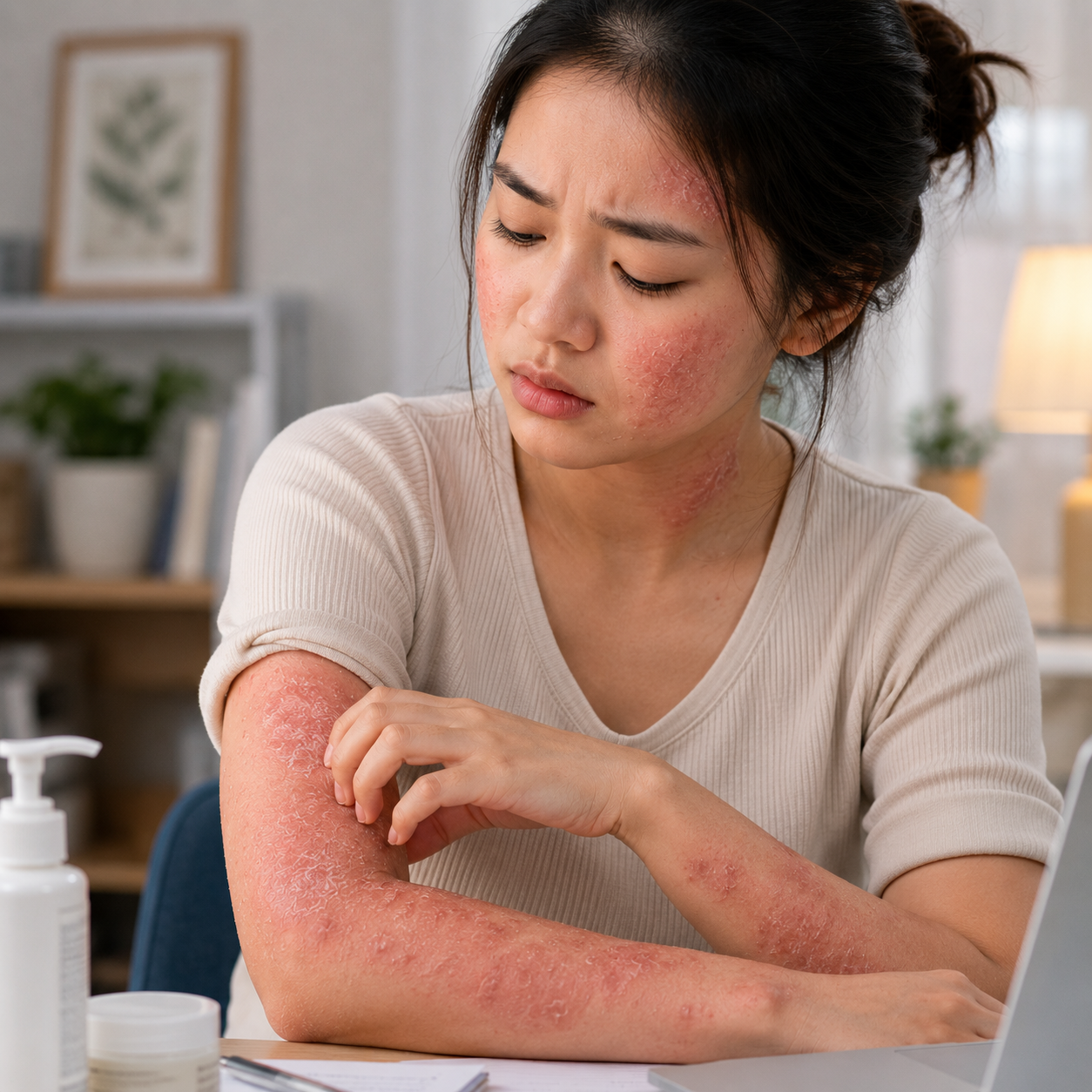
Adults
Adult eczema — whether longstanding since childhood or newly developed — affects confidence, work and daily comfort. Hand eczema, contact dermatitis from work exposures, and chronic atopic eczema all fall within our scope. We focus on identifying your personal triggers, stabilising your skin and building a routine that fits your life.
Eczema & Dermatitis FAQs
The questions patients ask us most about eczema and dermatitis.
Book an Appointment- Dermatitis means inflammation of the skin. Eczema is the most common type of dermatitis, so the two words are often used to mean the same thing. There are several kinds of dermatitis, and eczema is one of them.
- Yes. Atopic dermatitis and atopic eczema are two names for the same condition - the most common form of eczema, causing dry, itchy and inflamed skin, often starting in childhood.
- Eczema results from a combination of a weakened skin barrier, an over-reactive immune response, genetics and environmental triggers such as soaps, heat, sweat, dust and certain fabrics.
- Treatment centres on repairing the skin barrier with regular moisturisers (emollients), calming flare-ups with topical anti-inflammatory creams, controlling the itch, and identifying and avoiding your triggers.
- There is no permanent cure for eczema, but it can be controlled very well. With the right routine and treatment, most people keep flare-ups to a minimum and enjoy long stretches of clear, comfortable skin.
- Common triggers include harsh soaps and detergents, heat and sweat, dry air, stress, rough fabrics like wool, dust mites and sometimes certain foods. Identifying your personal triggers is key to preventing flares.
- The cost depends on the severity of your eczema and the plan recommended after assessment. We believe in transparent pricing - your doctor explains all options and costs upfront, with no hidden fees.
- We provide eczema and dermatitis treatment across Penang, Kedah, Perak and Kuala Lumpur. No referral is needed - book directly at the location most convenient for you.
- Eczema is a long-term skin condition that makes skin dry, itchy, red and inflamed. It is the most common form of dermatitis and tends to flare from time to time. It cannot be permanently cured, but it can be controlled very well with the right routine and treatment.
- Dermatitis simply means inflammation of the skin. It is an umbrella term covering several types — atopic dermatitis (eczema), contact dermatitis and seborrhoeic dermatitis — each with different triggers but similar dry, itchy, inflamed skin.
- Eczema is not contagious, so it cannot spread from one person to another. It can, however, appear in new areas of your own skin during a flare, especially if it is scratched — so treating flares early helps prevent it from worsening.
- Mild eczema can settle on its own, and many children grow out of it. For most people, though, eczema comes and goes over time, so a consistent skincare routine and treatment plan give the best long-term control.
- Yes — eczema often runs in families. If you or close relatives have eczema, asthma or hay fever, you are more likely to develop it. Genetics combine with environmental triggers to cause flare-ups.
Stop the Cycle
Don't Let Eczema Control Your Life
Book a proper eczema assessment at your nearest DSH location. No referral needed. Our doctors will diagnose your condition, identify your triggers, and build a treatment plan designed for lasting control — not just temporary relief.